Employers can generally track a company-owned vehicle without asking the driver’s permission first, since ownership of the vehicle is the main legal hinge in most states, not the driver’s consent. “Generally legal” is not the same as “no strings attached,” though. Most states that address the question at all require some form of disclosure, usually a line in an employee handbook or a signed acknowledgment, before tracking begins. Skip that step and a legal practice starts to look like a policy violation, and in a smaller number of states, an actual legal problem.
Why ownership changes the analysis
Vehicle tracking law leans heavily on who owns the thing being tracked. A GPS unit installed in a car the company owns and the employee merely drives for work is treated very differently from a tracker placed on an employee’s personal vehicle without their knowledge, even if that vehicle is occasionally used for work errands. Courts have generally held that an employer has a legitimate business interest in knowing where its own property is and how it’s being used, which puts company vehicle tracking on much firmer legal ground than tracking a personal car ever would be.
This is also why the same legal reasoning doesn’t carry over to a personal vehicle a company merely reimburses mileage on. If the title isn’t in the company’s name, the ownership argument disappears, and a tracker placed on that car without the employee’s knowledge starts to look a lot more like the kind of covert personal tracking that state stalking and privacy statutes were written to stop.
What disclosure actually requires, state by state
A handful of states go further than “it’s legal if you own the car” and require the employer to actually tell employees tracking is happening, typically through a written policy, an employee handbook acknowledgment, or in rarer cases a more formal notice. The exact mechanism and the exact states involved shift as legislatures revisit the topic, so treat any specific citation with caution and check your own state’s current statute or consult an employment attorney before assuming either “no disclosure needed” or “a specific form is required.” Our state-by-state GPS tracking law overview breaks down the general categories in more depth, and it’s the better starting point than guessing based on what a neighboring state requires.
Even in states with no explicit statutory disclosure requirement, most employment lawyers recommend disclosing anyway. A written policy protects the employer as much as it informs the employee: it heads off the “I didn’t know” argument in a dispute, and it draws a clean line around what the tracking data will and won’t be used for, which matters if the question ever ends up in front of a labor board or a judge.
Where fleet tracking tends to run into real trouble
The legal risk in this area rarely comes from the tracking itself. It comes from what happens after hours, once a shift ends and the vehicle goes home with the employee for the night. A device that keeps logging location on nights, weekends, and personal errands starts to raise a separate privacy question distinct from ordinary work-hours fleet management, even on a vehicle the company fully owns. Some employers address this by geofencing the tracking to work hours only, or by pairing an ignition-based trigger so the device only actively logs while the vehicle is running on the clock.
A second common friction point is scope creep: tracking installed to manage fuel costs and delivery routes quietly turning into a tool for monitoring an employee’s personal errands or off-hours movements. Even where the underlying tracking is legal, using the data that way tends to sour trust fast and, depending on the state and the specifics, can shift the legal analysis if a court decides the employer’s stated business purpose no longer matches how the data is actually being used.
How this differs from tracking a teenager’s car
Parent-to-teen tracking gets discussed constantly alongside employer tracking because the underlying legal question, does ownership of the vehicle justify tracking the person driving it, rhymes closely between the two situations. The legal reasoning is similar (a parent who owns the car generally has the same standing an employer does), but the social and practical stakes differ, since a teenager living at home has far less standing to object than an employee with other job options. Our breakdown of tracking a teenager’s car covers that side of the same ownership argument in detail.
What the data can and can’t be used for
A fleet tracker typically logs location, speed, idle time, and route history, all tied to the vehicle rather than to the person by name unless the company also assigns drivers to specific vehicles in its records. That distinction matters in practice more than people expect. A company running a shared fleet, where different drivers rotate through the same trucks across a week, has a much weaker case for using tracking data in a disciplinary conversation about one specific person’s habits than a company where each driver is assigned a single dedicated vehicle.
Speed data raises its own question. Some employers use tracking logs to flag speeding patterns for safety coaching, which is broadly defensible as a legitimate business purpose. Using the same log to build a case for termination over a single flagged incident, without any other corroborating record, tends to hold up less well if it’s challenged, particularly in states with stronger employee protection statutes. The safer practice, and the one most employment lawyers recommend, ties tracking data to documented policy violations rather than one-off numbers pulled from a report after the fact.
Union contracts and collective bargaining add another layer
Where a fleet is unionized, tracking often has to clear a separate hurdle beyond general state law: many collective bargaining agreements require the employer to negotiate the introduction of new monitoring technology, or at minimum notify the union before rolling it out. Skipping that step can trigger a grievance even in a state where tracking a company vehicle would otherwise need no disclosure at all. Employers running a mixed union and non-union fleet sometimes end up with different disclosure obligations for different groups of drivers doing functionally the same job, which is a detail worth checking with labor counsel rather than assuming one blanket policy covers everyone.
The hardware employers actually use
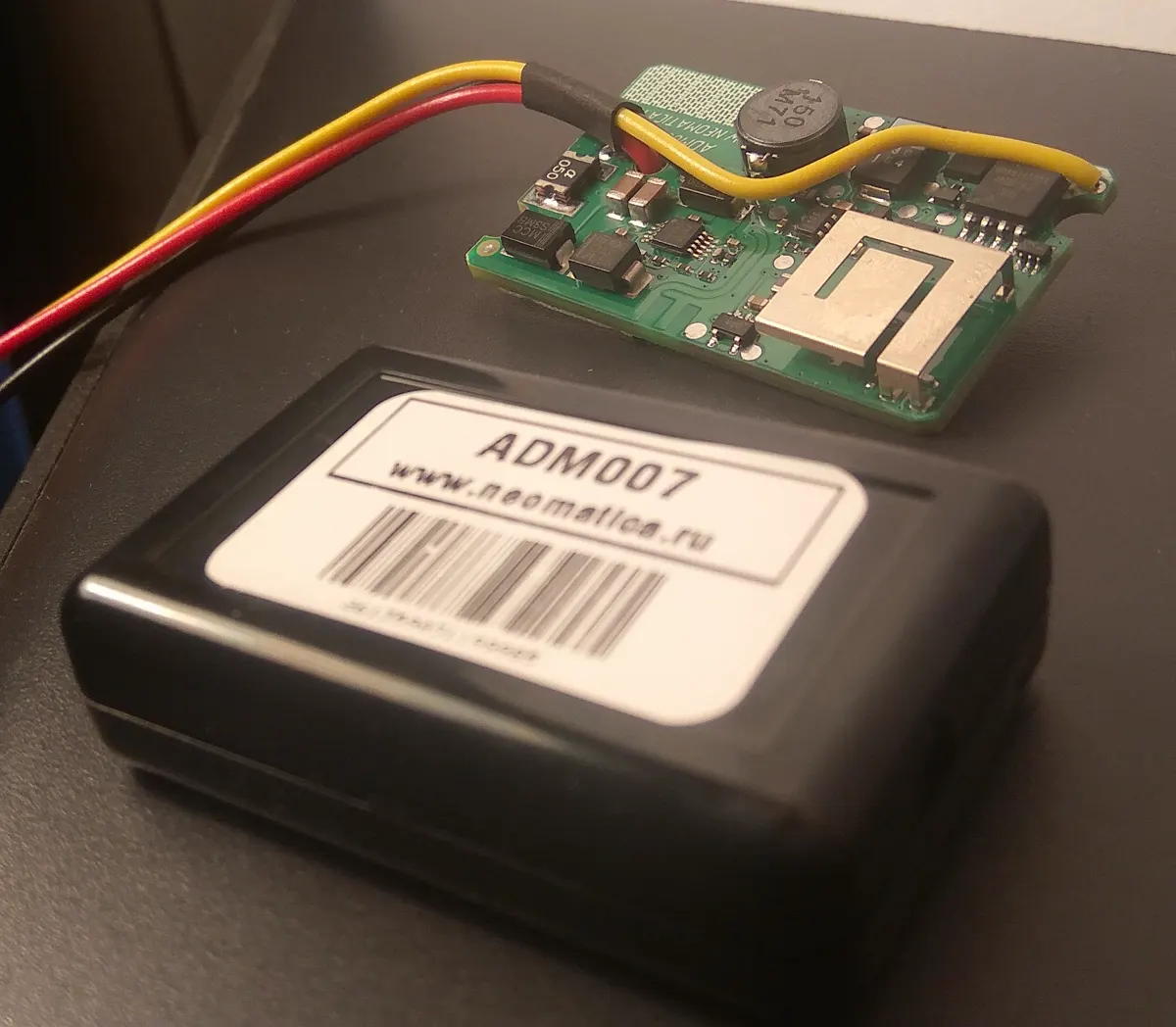
Fleet tracking almost always means a hardwired unit plugged into the OBD-II port or wired directly into the vehicle’s electrical system, not a magnetic battery tracker stuck under a bumper. Hardwired units draw continuous power, report in real time without needing a battery swap, and integrate with the fleet management software many companies already use for maintenance scheduling and fuel tracking. Our comparison of magnetic and hardwired trackers covers why fleet operations lean hardwired almost universally, aside from short-term or unusual situations.
An employee who wants to confirm exactly what’s installed and what it can see can generally ask HR or a manager directly, since a disclosed fleet tracking program should have documentation the employee is entitled to see. For anyone checking a vehicle without wanting to ask first, our guide to checking a car for a GPS tracker covers the practical inspection points, though on an openly company-owned fleet vehicle this is rarely necessary.
Verdict
Tracking a company-owned vehicle without the driver’s permission is legal in the large majority of states, because ownership, not consent, is the deciding factor. Most states still expect some form of disclosure through policy, and skipping that step turns a legal practice into an avoidable dispute. The rules shift the moment a personal vehicle is involved or tracking continues into off-hours use unrelated to the job.
Frequently asked questions
Do employers need a court order to track a company vehicle?
No. Tracking property the company owns doesn’t require judicial approval the way surveillance of a specific person for legal proceedings might. A written internal policy is the more common and more relevant requirement.
Can an employee refuse to have their company car tracked?
Generally no, if the vehicle belongs to the employer and tracking is disclosed as a condition of using it for work. An employee uncomfortable with that arrangement can raise it with HR, but ownership usually settles the legal question.
What happens if a company tracks a personal vehicle without telling the employee?
That’s a different legal category entirely. Without company ownership of the vehicle, undisclosed tracking looks much closer to the kind of covert personal surveillance that state privacy and stalking statutes were written to address.
Does tracking have to stop when a shift ends?
Not automatically, but continuing to log location after hours on a vehicle used for personal time raises a separate privacy concern from work-hours fleet management, and many employers geofence or trigger tracking to work hours specifically to avoid that gray area.
If a written tracking policy doesn’t exist yet at a company running fleet vehicles, that’s the gap worth closing before the hardware question, since the disclosure is usually what a dispute actually turns on, not the tracker itself.
Behind this review
TrueSpyTech does not operate a test lab, and no article here rests on a unit we plugged in ourselves. Research pulls the spec sheets and the relevant law, the pattern in owner reports fills in what a spec sheet will not admit, and an editor signs off before anything goes live. Ratings are locked before affiliate links go in, never after. The full protocol is on our How we review page.
Google lets you pick which sites come up first in your own results.