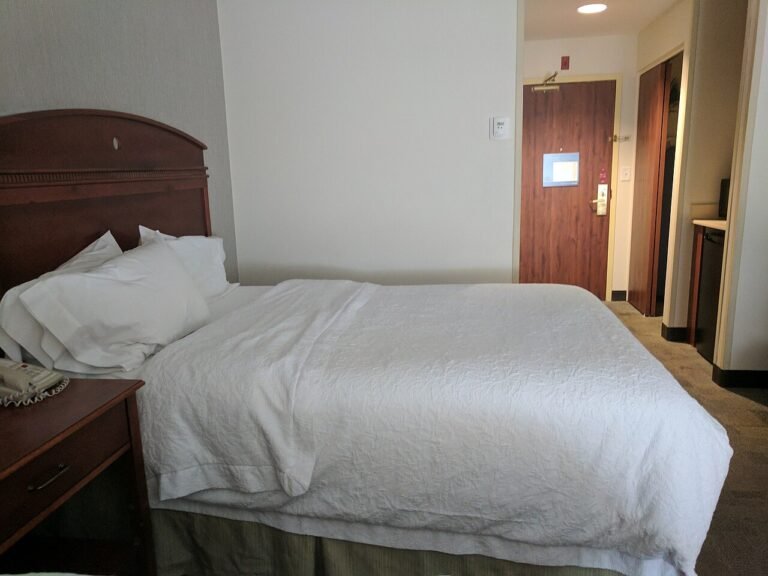
If you find what looks like a hidden camera in a bathroom, bedroom or rental, do not unplug it, pry it open or throw it in your bag. Leave it where it is, photograph it and the room around it, write down the time, leave if you feel unsafe, and call the police. That order protects the one thing you cannot recreate afterward: evidence that the device was where you found it, doing what it was doing.
This is general information, not legal advice, and the details differ by state and by who put the camera there. The sequence below is a sensible default, and the sections after it explain the reasoning and the edge cases.
First ten minutes
- Stop searching once you have a credible find. Every further minute of handling the room risks smudging it.
- Photograph the object from several distances: wide, to show where it sits in the room, then close, showing any lens, hole, seam, label or cable. Use your phone’s timestamps, and write the time down separately in case the metadata is questioned later.
- Do not press buttons, remove a card or unplug it. If it records to a card, that card is the evidence. If it streams, power loss may cut off the only copy.
- Do not talk about it near the object. If the device has a microphone, a conversation about what you found is being recorded, and if someone is watching live, they have been warned.
- Move to a safe place and call the police. Describe what you found and where. Ask the dispatcher whether to wait on site.
Why you do not touch it
A camera that has been moved, opened or powered down is a weaker exhibit. The defense in a prosecution can ask who handled it and what changed. A card that you pulled out and viewed on your laptop now has your fingerprints and your device in its chain of handling. Investigators have forensic tools and training for exactly this. Your photographs show the scene as it was, which is what you can contribute.
There is an exception worth stating plainly: if you believe the device is live-streaming you and you are in immediate danger, your safety comes first and you should leave. Nothing about evidence is worth staying in a room where someone may be watching.
Whether it is actually illegal
Most people assume that finding a camera means a crime. Often it does, but not always. A visible, disclosed camera in a living room is lawful in most places, and a landlord or host may have installed a device in a common area under rules that allow it. The question turns on where it points, whether it was concealed, whether it records audio and whether the people recorded had consent.
The statutes are specific. California Penal Code 647(j) covers concealed cameras used to record people in a state of undress in a bedroom, bathroom, changing room, fitting room, dressing room or tanning booth. Texas Penal Code 21.15 covers recording intimate areas and recording another person in a bathroom or changing room without consent, as a state jail felony. At the federal level, 18 U.S.C. 1801 applies only in the special maritime and territorial jurisdiction of the United States, so it does not reach an ordinary rental. If the device records sound, 18 U.S.C. 2511 may apply to interceptions of conversations the recorder was not part of. For the state-by-state picture, our guide to US surveillance laws and our explainer on hidden cameras at home go further. A prosecutor, not you, decides whether the facts fit a statute.
If it is in a rental or hotel
Two reports run in parallel. The police report is the legal one. A report to the platform or hotel is the contractual one. Airbnb’s published policy bans indoor cameras that monitor any part of a home’s interior and bans hidden cameras everywhere; hotels have their own policies, which this article does not summarize because each chain publishes its own. Report to the platform after the police, in writing, and attach the photographs. Keep copies of the listing, the booking confirmation, the host messages and your own photographs somewhere the host cannot delete them.
Do not confront the host before you have spoken with the police. A confrontation can lead to the device disappearing or the footage being deleted, and it does not help you if the person is hostile. Do not post about it publicly before the police have it either: naming a person on social media before an investigation is a separate legal risk for you.
If it is in your own home
That changes the questions. Who has had access: a contractor, a former partner, a roommate, a previous tenant? A camera in a home you rent may belong to the landlord, and whether that is lawful depends on the state and on where it points. A camera that does not belong to you and that you did not authorize is a police matter, not a project for you to solve by tracing it yourself. If you suspect a partner or ex, say so to the officer and consider contacting a domestic violence advocate, since covert surveillance often goes along with other forms of control. The National Domestic Violence Hotline is at 1-800-799-7233.
Think about what else may be there. A camera is rarely alone. If you found one, check for others, and consider whether other forms of tracking are in play; our counter-surveillance guide covers the wider routine, and the hotel and Airbnb sweep is the place to start on the room itself.
What not to do
- Do not access the camera’s account, app or cloud. Logging in to someone else’s device may itself break the law, including the Computer Fraud and Abuse Act, 18 U.S.C. 1030.
- Do not try to wipe or “disable” the device by resetting it.
- Do not remove it as a souvenir or leave with it. Removing property from a rental is a problem of its own.
- Do not assume you will recognize a camera you are looking at; a smoke detector or a charger may be exactly what it appears to be. Photograph and ask the police to look.
Afterward
Ask the officer for the report number before they leave, and ask who the contact is for follow-up. Write down your own account the same day, while it is fresh: where you were, why you looked, what you saw, in what order. If you were a guest, think about speaking to an attorney about a civil claim. A civil claim depends on the state and the facts, and a lawyer can say that; a blog post cannot.
Behind this review
TrueSpyTech does not operate a test lab, and no article here rests on a unit we plugged in ourselves. Research pulls the spec sheets and the relevant law, the pattern in owner reports fills in what a spec sheet will not admit, and an editor signs off before anything goes live. Ratings are locked before affiliate links go in, never after. The full protocol is on our How we review page.
Google lets you pick which sites come up first in your own results.