
US surveillance and recording law isn’t one law. It’s a patchwork of federal wiretap statutes and fifty different state consent rules, and which one applies to you depends on what you’re recording, where you are, and who else is in the room. As of 2026, the broad shape looks like this: video without audio is usually legal almost anywhere except where someone has a real expectation of privacy, audio recording depends heavily on your state’s consent rule, and GPS tracking is legal on your own property and murky everywhere else. None of that replaces reading your specific state’s current statute, and this overview won’t try to.
Verdict
Treat consent as the default question for audio, treat “expectation of privacy” as the default question for video, and treat GPS tracking as legal on things you own and risky on things you don’t. Then check your state, because the exceptions are where people get into trouble.
What’s the difference between one-party and two-party consent states?
In a one-party consent state, you can legally record a phone call or in-person conversation as long as you’re a participant in it, even if the other person has no idea. Most states work this way. In a two-party (technically “all-party”) consent state, everyone being recorded has to agree, which changes how you’d legally record a conversation you’re part of, let alone one you’re not. California, Florida, Illinois, and Washington are commonly cited two-party states, but the list and the exact wording shift, so don’t work from memory. Our breakdown of one-party and two-party consent states has the fuller list and the state-by-state nuance, including states with hybrid rules that only apply consent requirements in specific contexts.
This distinction matters most for phone calls and voice memos, less for video without audio, and it changes almost nothing about GPS tracking, which runs on separate law entirely.
Underneath all fifty state rules sits the federal Wiretap Act, which sets a one-party consent floor for the whole country. A state can require more consent than the federal baseline, which is exactly what two-party states do, but no state can legally require less. That’s why the practical question is always “what does my state add on top of federal law,” not “does federal law apply at all.” It always does. State law is where the real variation lives.
When is a hidden camera legal in your own home?
Generally, yes, you can put a camera anywhere in your own home, including common areas, with one hard line: no camera in a bathroom, bedroom, or anywhere someone would reasonably expect total privacy, regardless of who lives there. A nanny cam in the living room is standard practice and almost never a legal problem. A camera pointed at a guest bedroom where a house-sitter sleeps is a different story, and courts have not been kind to homeowners who cross that line, even in their own house. Landlord-tenant situations add another layer, since a tenant’s rented space carries stronger privacy protections than a shared common area. Our guide to hidden camera legality at home covers the room-by-room breakdown and where landlords specifically get this wrong.
Audio changes the calculation. A camera that only records video is judged by expectation-of-privacy rules. The moment it also records audio, you’re back to your state’s consent law, because a conversation is being captured, not just a scene.
How do GPS tracking laws work by state?
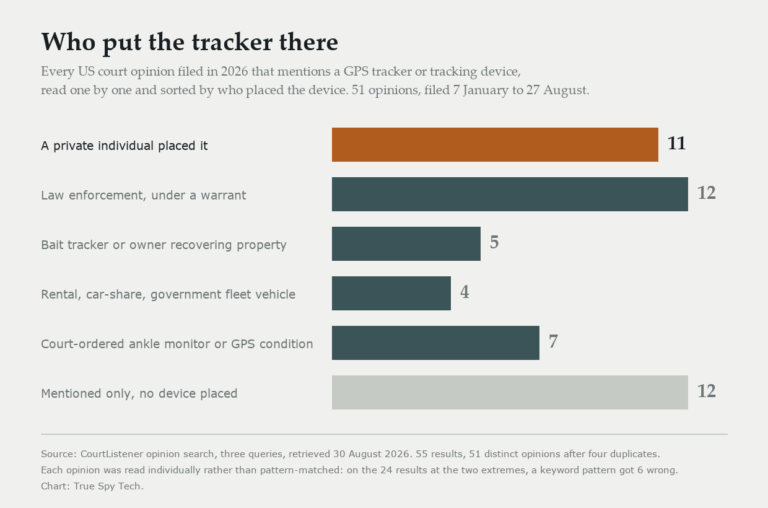
Tracking a car you own, or a car titled jointly with someone else, is legal in most states without needing that person’s consent, similar to how a parent can track a minor child’s phone. Tracking a vehicle you don’t own or have no legal interest in, especially attached without permission, crosses into stalking statute territory in a growing number of states, and a few have passed GPS-specific tracking laws with real criminal penalties attached. The line usually comes down to ownership and consent, not the technology itself. A tracker is not illegal. Attaching it to someone else’s property without a legal basis often is.
Employers tracking company vehicles generally have solid legal footing, especially with a written policy employees have acknowledged. Tracking a spouse’s personal vehicle during a separation is where most of the actual legal disputes originate, and state law varies enough here that “my friend did it and it was fine” is not a legal opinion worth trusting. Our state-by-state GPS tracking law guide goes deeper on this.
The rise of small trackers like AirTags has pushed several state legislatures to update stalking statutes specifically to cover “electronic tracking devices” as their own category, separate from older laws written around bulkier GPS hardware. A handful of well-publicized cases involving an AirTag slipped into a bag or a car without the owner’s knowledge sped this along, and both Apple and the manufacturers of similar trackers have added unwanted-tracking alerts partly in response to the legal pressure, not just as a customer-service feature. The legal exposure for planting a tracker on someone without a legal basis hasn’t really changed, but the statutes naming the specific technology have gotten sharper, and prosecutors now have an easier time pointing to a law written with this exact scenario in mind.
Can you record police in public?
Yes, in nearly every jurisdiction, recording police officers performing their duties in a public place is protected activity, and courts have consistently upheld this. The First Circuit’s 2011 ruling in Glik v. Cunniffe is one of the most cited cases here, establishing that openly recording police in public is protected under the First Amendment as long as you’re not physically interfering with the officer’s work. “Openly” is doing real work in that sentence. States differ on whether you have to disclose that you’re recording, and a few have tried (with limited success) to pass laws restricting how close you can stand while filming. Public means public, though: a sidewalk, a park, the view from your own porch. It stops applying once you’re somewhere the officer has a legal right to exclude you, like inside a private building without permission.
Are dash cams legal, and does the state you’re driving through matter?
Dash cams recording video only are legal to use while driving in all fifty states, without exception, since a public road offers no meaningful privacy expectation for anyone visible on it. The audio channel is where two-party consent states create friction, because a dash cam’s built-in microphone will pick up passenger conversation, and depending on how strictly your state enforces its consent law, that could technically require everyone in the car to know they’re being recorded. In practice this is rarely enforced against personal dash cams, but “rarely enforced” isn’t the same as “not the law.” Our dash cam legality guide covers windshield-mounting restrictions too, which are a separate, more commonly enforced issue than the audio question.
| Recording type | Legal default | Main variable |
|---|---|---|
| Video only, public space | Legal nationwide | No consent question; expectation of privacy is the test |
| Audio, phone call or conversation | Depends on state | One-party vs. two-party consent |
| Home security camera, common areas | Legal | No audio, no bathroom/bedroom placement |
| GPS tracker on a vehicle you own | Legal | Ownership or legal interest in the vehicle |
| GPS tracker on someone else’s vehicle | Risky to illegal | State stalking and tracking statutes |
| Recording police in public | Protected activity | Must be open, non-interfering |
Do smart speakers and doorbell cameras follow different rules?
Not fundamentally, though they raise the questions in unfamiliar ways because most people don’t think of a smart speaker as a recording device. A voice assistant that’s always listening for a wake word is legally treated the same as any other audio recording device once it starts capturing and storing speech, which puts it under the same consent framework as a phone call, at least in theory. In practice, enforcement here is almost nonexistent, partly because proving what a device actually recorded and stored is harder than proving a person hit record on their phone.
Doorbell cameras sit closer to the public-space rules that cover dash cams. A camera aimed at your own porch and the public sidewalk beyond it is generally fine, since neither space carries a strong privacy expectation. Where doorbell cameras generate actual disputes is angle: one aimed squarely into a neighbor’s window or fenced backyard crosses from “monitoring my property” into “surveilling someone else’s,” and several neighbor disputes over exactly this have ended up in small claims court. The fix is usually mechanical, not legal: adjust the angle before it becomes a problem, since courts tend to side with whoever can show the footage covers a legitimate, narrow purpose.
What about recording a work meeting or a phone call with your doctor?
Workplace and professional-services recording sits at the intersection of consent law and separate confidentiality rules, which is why it trips people up more than home cameras do. A one-party consent state technically permits you to record your own performance review without telling anyone. Whether your employer can fire you for it, or whether the recording holds up anywhere later, is a completely different question than whether the recording itself broke a criminal statute. Healthcare conversations carry HIPAA-adjacent expectations on the provider’s side that don’t necessarily restrict what you can do as a patient, but assuming that means “anything goes” is how people end up surprised. If this is your actual situation, our piece on recording a work meeting without consent walks through it in more detail than a general overview can.
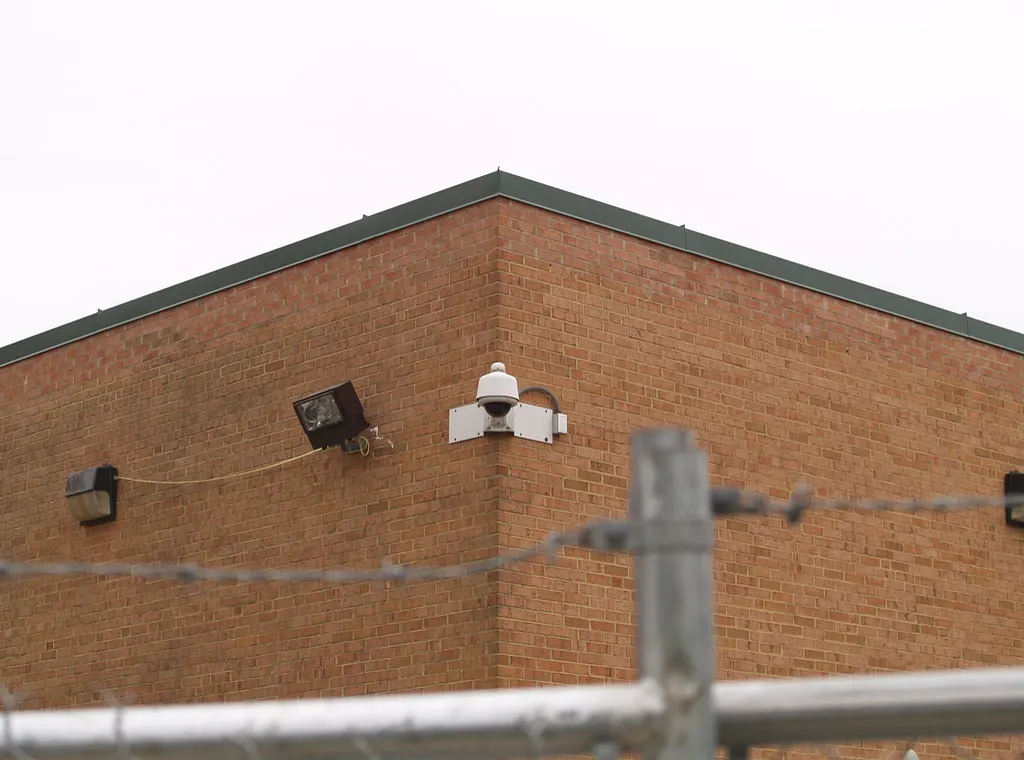
Video monitoring in a workplace is treated more loosely than audio almost everywhere, since an employer generally has a legitimate interest in what happens on its own property during business hours. Cameras covering a sales floor, a warehouse, or a break room are standard and rarely challenged successfully. The line moves once audio gets added to workplace cameras, because now the consent question from the top of this page applies inside the building too, and a handful of states specifically require a posted notice when workplace audio recording is happening, not just video. Bathrooms and locked employee-only changing areas stay off-limits regardless of what state you’re in.
Where does counter-surveillance fit into all this?
Once you know the legal shape of recording and tracking, the natural next question is usually “how do I check whether someone’s doing this to me.” Sweeping your own space or vehicle for hidden devices is legal everywhere, no permission required, because you’re checking property you have a legal interest in. What you can’t legally do is jam a signal to disable a device you find, even if the device itself was placed illegally. Detection and removal, yes. Interference, no. Our counter-surveillance guide covers the practical side of that sweep, room by room and device by device.
The two devices this page keeps mentioning
K18 RF Detector
The counter-surveillance half. Finds a transmitting camera in a rented room or a tracker under a bumper, for less than a night in a hotel.
- RF sweep plus a lens finder
- Pocket size, nothing to install
Viofo A119M Pro
The recording half. Small enough for the mirror to hide it, and the footage loops onto a microSD card that stays in the car with you.
- Mounts behind the mirror, which no state objects to
- No card in the box, so budget a high-endurance microSD; it takes up to 512GB
Deeper on each: the counter-surveillance guide and the dash cam guide.
Frequently asked questions
Is it illegal to record someone without their knowledge in a one-party consent state?
No, as long as you’re a participant in the conversation, one-party consent states allow you to record without informing the other person. This applies to phone calls and in-person conversations you’re directly part of, not conversations you’re merely overhearing from another room.
Can I install a hidden camera in a shared Airbnb or rental?
Airbnb’s own policy and most state law both prohibit hidden cameras in bedrooms and bathrooms of rental properties, and hosts are increasingly required to disclose any camera locations upfront. A guest finding an undisclosed camera in a private space has grounds for both a platform complaint and, depending on the state, a legal one.
Does state law follow me, or the person I’m recording?
Generally, courts look at where the recording took place and sometimes where each party was physically located during a call, which gets complicated fast when a call crosses state lines. If you’re in a one-party state calling someone in a two-party state, the safer legal assumption is to follow the stricter rule, though this genuinely varies by case.
Is GPS tracking a company vehicle different from tracking a personal one?
Yes. Employers tracking vehicles they own, especially with a written policy employees have signed, are on much firmer legal ground than someone tracking a personal vehicle belonging to another adult. Ownership and a documented policy are the two things that matter most here.
Does it matter if I record a work call on Slack or Zoom instead of my personal phone?
The platform doesn’t change the underlying consent law, only how the recording gets stored and who else might have access to it. A one-party consent state still permits you to record a Zoom or Slack huddle you’re part of, but many of these platforms notify all participants automatically when recording starts, which sidesteps the legal question by making it moot in practice.
State legislatures amend these statutes more often than most people assume, sometimes yearly. If a specific situation matters to you, a five-minute search of your state’s current penal code, or a real conversation with a local attorney, beats any general guide, including this one.
Behind this review
TrueSpyTech does not operate a test lab, and no article here rests on a unit we plugged in ourselves. Research pulls the spec sheets and the relevant law, the pattern in owner reports fills in what a spec sheet will not admit, and an editor signs off before anything goes live. Ratings are locked before affiliate links go in, never after. The full protocol is on our How we review page.
Google lets you pick which sites come up first in your own results.