Dash cams are legal to use in all 50 states. That’s the short answer, and it holds for a daily commute, a rideshare shift, or a cross-country drive alike. What trips people up isn’t the recording itself, it’s where you’re allowed to stick the camera on your windshield. We cover the full buying picture in our dash cam guide, but this one is just about the legal side: mounting rules, what the footage can be used for, and the handful of states worth double-checking before you install anything.
Quick answer
Owning and using a dash cam is legal in all 50 states. Two things change from one state to the next: where you are allowed to stick it on the glass, and whether you can record audio inside the cabin without telling the people in the car.
Video recording from inside your own vehicle, on a public road, doesn’t require anyone’s permission. You’re capturing what happens in plain view from a place you have every right to be. That’s a different question from audio, which we’ll get to, and a different question from where physically you’re allowed to mount the thing.
Where the actual restriction lives: windshield placement
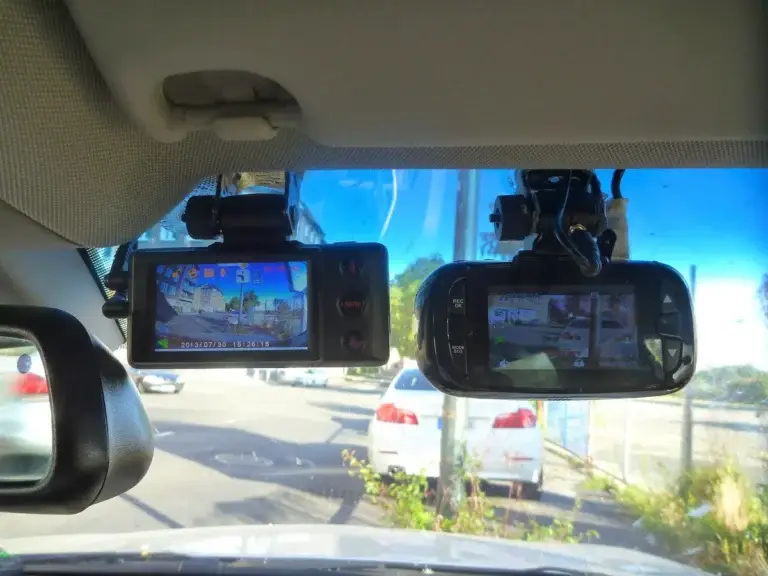
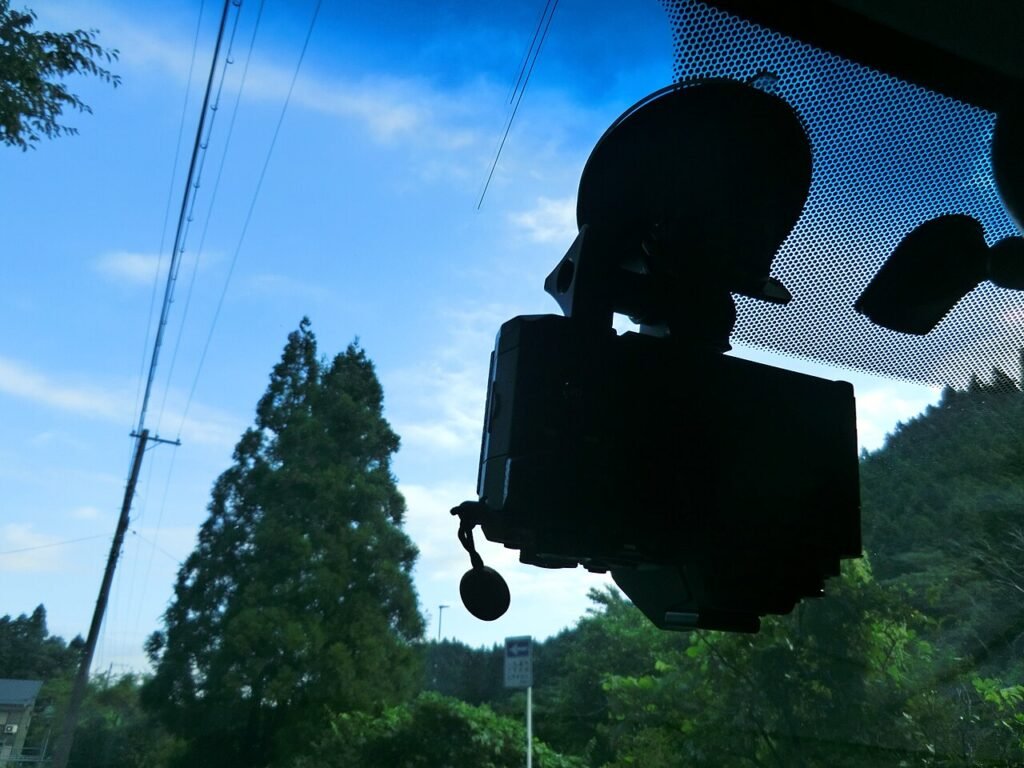
No state bans dash cams outright. The restriction, where it exists, is about obstructed views. A handful of states regulate what you can attach to a windshield at all, dash cams included, because anything mounted there can block a driver’s sightline. California, Minnesota, South Dakota, and Vermont are the states most often cited for this kind of rule, and each handles it a little differently: some carve out an exception for small devices mounted low in a corner (the same exception that covers GPS units and toll transponders), others are stricter about placement generally.
We’re deliberately not quoting section numbers or fine amounts here. Those get amended, and a wrong number printed on a blog is worse than no number at all. If you live in one of the states above, or you’re not sure, a two-minute search for “[your state] windshield obstruction law” pulls up your state’s current statute directly, and that’s the version worth trusting, not this article. As of 2026 the safest move everywhere, restricted state or not, is to mount low, in a corner, out of your direct sightline. It’s also just better for the footage.
Does dash cam footage hold up as evidence?
Generally, yes. Courts and insurance adjusters treat dash cam video like any other recording: it can be introduced, and both sides can use it. That cuts both ways, which is worth sitting with for a second. If your footage shows you rolling a stop sign right before the other driver ran a light, that’s now part of the record too. We go deep on this specific question, including the audio wrinkle, in can a dash cam video be used against you in court.
The one place video-only legality stops being enough is audio. Most dash cams have a built-in microphone, and turning it on means you’re now subject to your state’s consent law for recording conversations, not just its rules for video. Roughly a dozen states require every party in a conversation to consent before it’s recorded; the rest only need one person (which can be you) to agree. Our plain-English overview of US surveillance and recording law breaks that split down properly. If you’re not sure which category your state falls into, the simple fix is leaving the microphone off, which most dash cam apps let you do in a menu without touching the video quality at all.
Where people get into trouble
It’s rarely the camera itself. It’s usually one of three things: a mount blocking more windshield than the state allows, a microphone left on in a two-party state during a conversation the driver wasn’t part of recording lawfully, or someone assuming a dash cam gives them legal cover to do something else illegal, like following another car too closely to “catch them on camera.” None of that is about the dash cam being illegal. It’s about ordinary traffic and privacy law applying the same way it always did, camera running or not.
Parking mode adds one more wrinkle worth a sentence. A camera that keeps recording while your car sits in a shared lot or on a residential street is still just capturing a public view, same legal footing as while you’re driving. Where it gets murkier is a driveway camera pointed squarely into a neighbor’s window, which edges toward the kind of targeted surveillance that a handful of states do regulate separately. Point it at the road and the sidewalk, not someone’s living room, and you’re fine.
Company vehicles and employer-provided cameras
If you drive a fleet vehicle or a company car with a dash cam already installed, the legal analysis above still applies to the recording itself, but a second layer gets added on top: your employer’s own policy and, in some cases, a union agreement or state employment law governing workplace monitoring. Employer-installed cameras that also monitor the driver, not just the road, sit closer to workplace surveillance than to the personal dash cam use covered here. If you’re unsure what your employer’s camera captures or how long footage is kept, that’s a question for HR or your handbook, not a state traffic statute.
Rental cars are simpler. Bringing your own portable dash cam into a rental is treated the same as bringing it into your own vehicle, since you’re the one doing the recording and the same state rules apply to you as the driver, not to the rental company.
Picking a camera once the legal picture is clear
Once you know the mounting rule for your state, the buying decision is mostly about resolution, storage reliability, and whether you want a second, rear-facing channel. We’ve got a full rundown of what to prioritize under $100 in the best dash cams under $100, which is the price band most people land in for a solid single-channel unit. The short version: buy an endurance-rated microSD card no matter which camera you pick, because a dead card is a far more common failure than any legal issue.
A camera that stays on the right side of all this
Viofo A119M Pro
Low-profile enough to sit behind the rear-view mirror, which is the one mounting spot no state argues about. It runs off a supercapacitor rather than a lithium battery, which is the part that matters in a car left to bake all afternoon.
- Mounts behind the mirror instead of eating windshield space
- A circular polarizing filter comes in the box, so windshield reflections are dealt with rather than baked into the footage
- Records 4K at 30fps behind an F1.8 lens, which is the resolution an adjuster will be squinting at
Resolution, parking mode and memory cards are covered in our dash cam guide.
Frequently asked questions
Is it illegal to have a dash cam facing outward at all times?
No. Continuous outward-facing recording from your own vehicle on public roads is legal everywhere in the US. The rules that exist target mount placement and, separately, audio consent, not the act of recording your drive.
Do I need a sign or sticker saying I’m recording?
No state requires a visible notice for outward-facing dash cam video. Some rideshare platforms and a few workplaces ask drivers to disclose in-cabin audio recording to passengers as a policy matter, which is separate from any state law requirement.
Can police make me hand over my dash cam footage?
Police can request it, and in some cases obtain it through a warrant or subpoena if it’s relevant to an investigation. You generally aren’t required to hand it over voluntarily on the spot, though refusing during an active incident can complicate things practically even if it’s your legal right.
Are dash cams legal for rideshare and delivery drivers specifically?
Yes, and most platforms actively encourage it for dispute protection. The same state mounting and audio-consent rules apply, with the added wrinkle that recording passengers’ conversations usually needs their awareness even in one-party states, since platform policy often sets a higher bar than the legal minimum.
Does a dash cam void my car’s warranty?
A properly installed dash cam, even hardwired through a fuse tap, doesn’t void a manufacturer’s warranty on its own. Warranty disputes usually only come up if the installation itself damages wiring or a component, which a clean, professional-grade hardwire kit avoids.
The legal picture here is one of the more forgiving ones in this whole space: mount it low, leave the microphone alone if you’re unsure about your state, and the camera does its job without becoming its own liability.
Behind this review
TrueSpyTech does not operate a test lab, and no article here rests on a unit we plugged in ourselves. Research pulls the spec sheets and the relevant law, the pattern in owner reports fills in what a spec sheet will not admit, and an editor signs off before anything goes live. Ratings are locked before affiliate links go in, never after. The full protocol is on our How we review page.
Google lets you pick which sites come up first in your own results.