
Yes, dash cam footage can be used against you in court. It’s treated as ordinary video evidence, which means either side in a dispute can introduce it, not just the person who owns the camera. If you’re weighing whether to install one, that’s worth sitting with before you assume the footage only helps you. For the full buying and legality picture, start with our dash cam guide.
Quick answer
Dash cam footage is admissible in most US courts, but only if nobody can argue it was edited. An unbroken file with an accurate timestamp does the work. A clip trimmed on your phone invites the other side to ask what else you cut.
Why footage cuts both ways
Once video exists, ownership doesn’t determine who gets to use it. In a civil claim after an accident, the other driver’s insurer or attorney can request your footage through discovery if it’s relevant, and a court can compel you to produce it. If that footage shows you following too closely, drifting out of your lane, or rolling through a stop sign right before the collision, it becomes evidence against your version of events, regardless of who ultimately caused the crash. This is standard practice with any recording, not a dash-cam-specific quirk.
The flip side is the more common reason people install one: footage that clearly shows the other driver at fault settles a dispute far faster than competing statements. Most of the time that’s exactly what happens. The point isn’t that dash cams are risky, it’s that the footage is neutral. It records what happened, not who it’s convenient for.
Does the audio track change anything?
It can, and this is where things get more state-dependent than the video side. Video-only footage is legal to capture and use as evidence everywhere in the US. Audio is governed separately by each state’s consent law for recording conversations, and roughly a dozen states require every party in a conversation to agree before it’s recorded. If your dash cam’s microphone was on during a conversation that becomes relevant to a legal matter, and your state requires all-party consent, that audio portion can itself become a legal issue independent of what it shows. Our plain-English rundown of US surveillance and recording law covers which states fall into which category. As of 2026, if you’re not certain which category your state is in, muting the microphone in your camera’s settings sidesteps the question entirely without touching video quality.
How footage typically gets from your camera to a courtroom
There’s no special process for dash cam video specifically. It follows the same evidentiary path as a phone video or a home security clip: someone has to preserve the original file, it needs to be authenticated (usually by the person who owns the camera confirming it’s an accurate, unedited recording), and opposing counsel can challenge its admissibility if there’s a real question about tampering or chain of custody. Practically, that means don’t edit clips before handing them over, keep the original file with its metadata intact, and back it up somewhere other than the camera’s SD card the moment you know an incident might matter legally, since loop recording will eventually overwrite it otherwise.
Police can also request footage during an active investigation, and can obtain it via warrant or subpoena if you decline to hand it over voluntarily. You’re generally not obligated to provide it on the spot, though that’s a practical and legal distinction worth understanding rather than relying on reflexively, especially in the middle of a stressful roadside situation.
What determines whether footage helps or hurts you
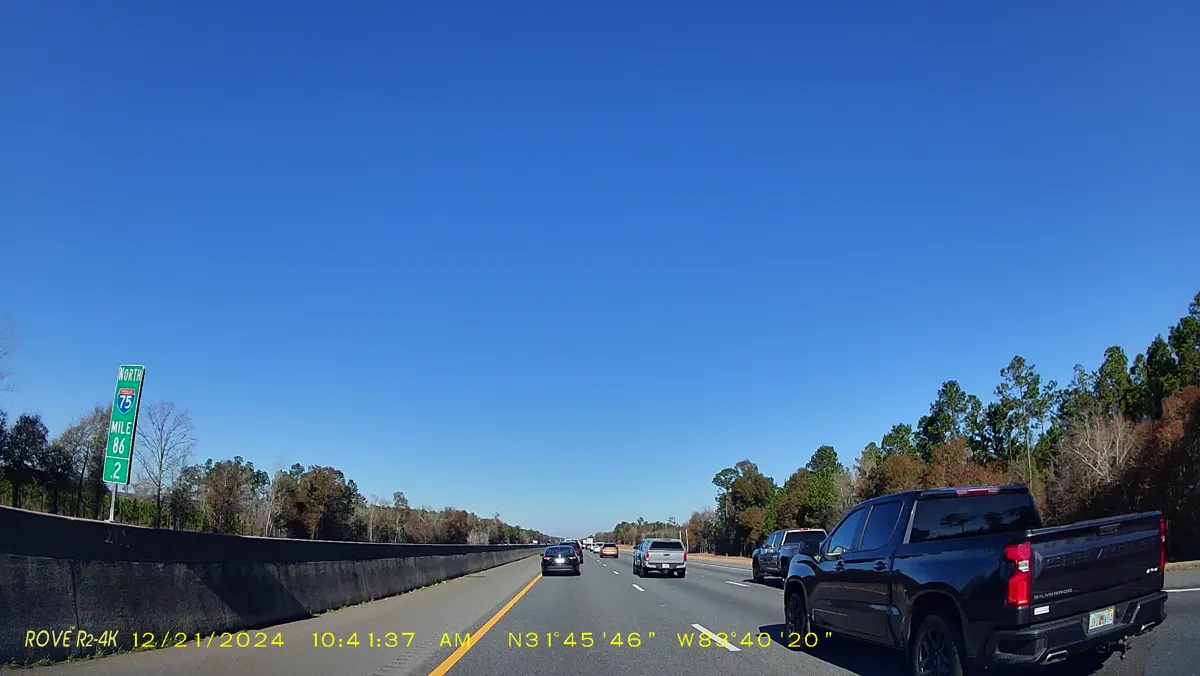
Mount placement and camera quality matter more here than most people expect. A camera angled too high, or mounted somewhere restricted under your state’s windshield rules, can create its own complications separate from what the footage shows. We cover exactly which states regulate mount placement and how to stay clear of the rule in are dash cams legal in your state. Beyond placement, a camera that captures a clear, timestamped, GPS-tagged clip is simply more useful as evidence than a blurry one, on top of being more useful for the day-to-day reason you bought it. If you’re shopping and want a model that handles this well without spending a lot, our picks in the best dash cams under $100 flag which budget cameras hold up on this front.
A real-world example of how this plays out
A common scenario looks like this: two cars collide at an intersection, and both drivers give the responding officer a different account of who had the light. Without footage, the report often comes down to whichever account sounds more consistent, plus any witnesses who happened to be nearby. With a dash cam running on either car, the recording usually settles it within minutes rather than becoming a drawn-out he-said-she-said between insurers.
The version that surprises people is when the footage cuts against the camera’s owner. If your dash cam shows you were the one who ran the light, having the footage doesn’t make the accident your fault, it just means the evidence reflects what happened instead of what you remembered under stress. That’s uncomfortable, but it’s also usually faster and cheaper to resolve than a drawn-out dispute with no evidence at all, since insurers spend less time investigating a clear-cut claim.
A few things worth doing before you ever need the footage
Set your camera to timestamp and GPS-tag automatically if it supports it, since a plain video with no metadata is weaker evidence than one with a verified time and location baked in. Get in the habit of backing up locked event clips off the SD card periodically rather than assuming the camera’s automatic event-lock feature will preserve everything you might eventually need. And if audio consent is a live concern in your state, decide now whether the microphone stays on, rather than working it out after an incident has already happened.
The camera side of the equation
Viofo A119M Pro
Writes continuous timestamped files and locks the clip around an impact so it survives the loop, which is the part that decides whether you still have the footage a week later.
- Listed with G-sensor and emergency lock, so an impact takes the clip out of the loop
- Quad-mode GPS ties location and speed to the trip, not just the clock
- Buffered parking mode holds the fifteen seconds before an event, so the hit itself lands in the file
If you are still choosing, start with the dash cam guide.
Frequently asked questions
Can insurance companies request my dash cam footage even if I don’t want to share it?
Generally yes, through the discovery process if a claim goes to a dispute or lawsuit. You’re not required to volunteer footage informally, but a court can compel production if it’s relevant, similar to any other piece of evidence in a civil case.
Is edited or clipped dash cam footage still admissible?
It can be, but editing raises authentication questions that a full, unedited file avoids. Courts generally want the original recording so the other side can verify nothing was cut or altered. Keep the raw file even if you also prepare a trimmed clip to make your point faster.
Does dash cam footage expire or become inadmissible after time passes?
There’s no fixed expiration on admissibility itself, but practically the footage only exists as long as you preserve it before loop recording overwrites the file. Statutes of limitations for filing a claim vary by state and by claim type, so the more urgent deadline is usually backing up the file, not a rule about the video going stale.
What happens if my dash cam recorded something unrelated to my case, like a neighbor’s property?
Incidentally captured footage from a public-facing camera generally isn’t treated the same as targeted surveillance, but it can still raise privacy questions if it’s used or shared outside the original purpose. If in doubt, don’t distribute footage beyond what’s directly relevant to your claim.
The honest takeaway is that a dash cam doesn’t tilt the legal odds in your favor by default. It just makes the record more accurate, and most of the time an accurate record is exactly what you want, even on the days it isn’t.
Behind this review
TrueSpyTech does not operate a test lab, and no article here rests on a unit we plugged in ourselves. Research pulls the spec sheets and the relevant law, the pattern in owner reports fills in what a spec sheet will not admit, and an editor signs off before anything goes live. Ratings are locked before affiliate links go in, never after. The full protocol is on our How we review page.
Google lets you pick which sites come up first in your own results.