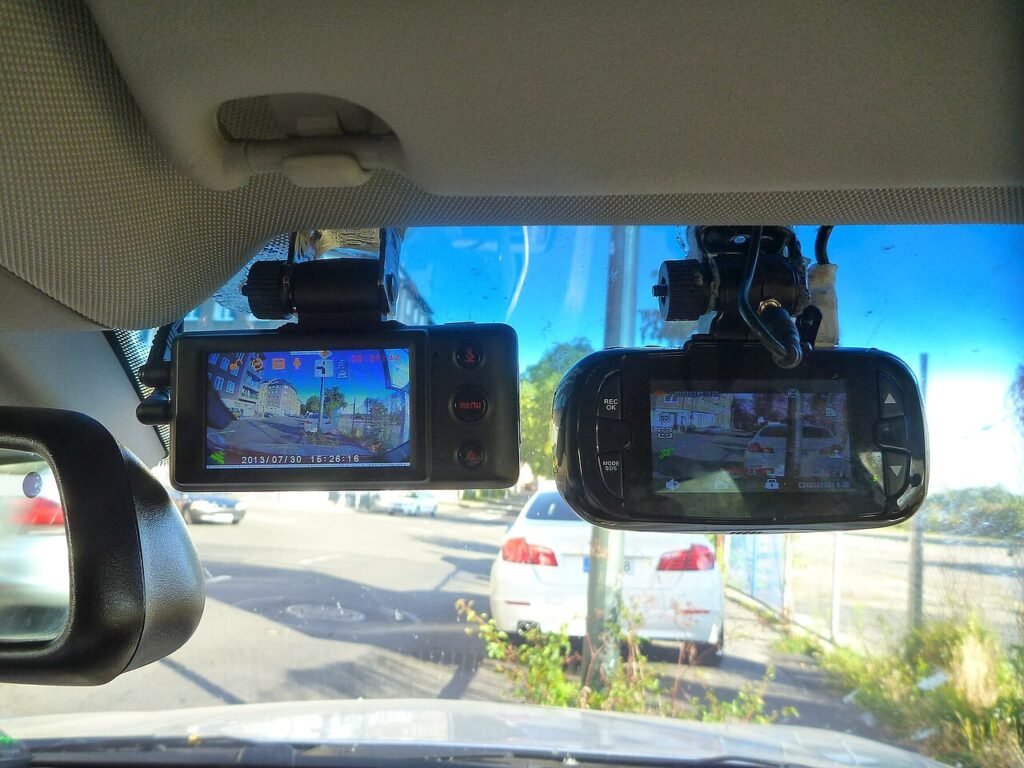
The best dash cam under $100 right now is the Redtiger F7N, and the one spec worth prioritizing at this price is low-light performance over raw resolution. A camera that claims 4K but turns headlights into a smeared white blob at night is worse in practice than a well-tuned 1080p sensor. This list sticks to cameras that actually hold up, not ones that just look good on a spec sheet.
For the full picture on what makes a dash cam worth owning at all, our dash cam buying guide covers mounting, storage, and parking mode in more depth than we’ll get into here.
What under $100 gets you
At this price you’re usually buying a single front-facing channel, 1080p to 1440p resolution, and often no built-in GPS, though a few models add one or the other as their single premium feature. You’re not getting a rear channel, real parking-mode hardware (most rely on the car battery draining slowly, not a proper low-voltage cutoff), or the sharpest low-light sensors on the market. That’s fine for most drivers. The core job, having footage of the ten seconds before and after something happens, doesn’t need a flagship camera to do well.
If a second, rear-facing channel matters for your situation, rideshare driving or heavy rear-end traffic being the two most common reasons, the top pick below is the only camera here that covers it. We compare the two setups directly in single vs dual-channel dash cams.
The top pick
Redtiger F7N
BEST OVERALL UNDER $100
- Records 4K on the front channel and 1080p on the rear, which almost nothing else does at this end of the budget
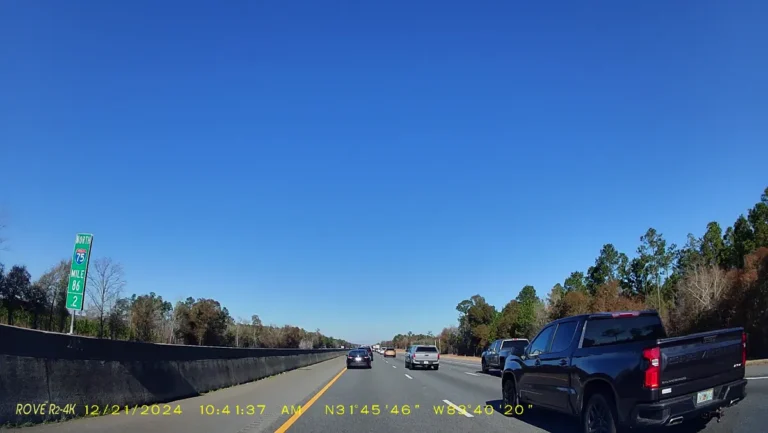
- An F1.5 aperture behind a six-layer glass lens, the part of the spec that decides whether night footage is readable
- Parking monitoring only works once you add the hardwire kit, which is a separate purchase
Two channels at this price usually means both lenses are mediocre. Here the front one is not. You get 4K on the road ahead and 1080p on the rear glass, with a wide enough aperture that headlights stay as headlights instead of blooming across the frame. The catch is parking mode, which does nothing until you buy the hardwire kit separately and tap it into the fuse box.
How the other budget options compare
| Model | Resolution | GPS | Rear channel |
|---|---|---|---|
| Redtiger F7N | 4K front / 1080p rear | Yes | Yes |
| Rexing V1 Basic | 1080p | No | No |
A second, rear-facing lens right at the $100 mark is unusual, and dual-channel cameras elsewhere start pushing toward $150. That is most of why the F7N is the pick. The Rexing V1 Basic is the fallback if the budget is genuinely tight rather than merely capped. It records 1080p on one channel, has no GPS and no rear lens, and makes no pretence otherwise.
What to skip at this price
Steer clear of anything advertising “true 4K” for under $50. The sensor and processor needed to deliver clean 4K footage cost more than that on their own, so a camera hitting that price point is either interpolating resolution or cutting corners somewhere else, usually the bitrate, which is what determines whether footage is sharp enough to read a plate. A 1440p camera with a good sensor beats a cheap “4K” camera in every practical test buyers report.
Also skip cameras that don’t list a specific supported microSD card speed class. Dash cams write video constantly, and a card that isn’t rated for the sustained write speed will drop frames or corrupt files well before its rated capacity fills up. Budget for a Sandisk High Endurance or Samsung PRO Endurance card as a separate purchase if the camera doesn’t include one.
What installation looks like
None of these three require professional installation. Each ships with an adhesive mount, and the whole setup is: stick the mount behind the rearview mirror, plug the power cable into a 12V socket or fuse tap, and tuck the cable along the windshield trim and down the A-pillar so it doesn’t dangle across your view. Budget for 15 to 20 minutes the first time, most of which is spent routing the cable neatly rather than anything technical. A cigarette-lighter power cable is the simplest option and what these cameras ship with by default; a hardwire kit that pulls power from a fuse box is a separate purchase if you want the camera to survive in parking mode without draining your battery.
Once it’s mounted, expect a short setup through the onboard screen, or through the companion phone app if you would rather pull footage over Wi-Fi than pop the card out. After that first setup, the camera runs on its own every time you start the car, no phone required.
The legal side, briefly
Every camera on this list is legal to run in all 50 states for video. The one thing worth checking before you install any of them is your state’s rule on windshield mounting, since a small number of states restrict where you can attach something to the glass. We cover which states and how to mount around it in are dash cams legal in your state. None of these cameras record audio by default in a way that creates a consent problem, but if you turn the microphone on, that’s a separate legal question from the video, worth a quick read of the same article before you do.
If you’re buying this for more than your own commute
A dash cam covers what happens to your car while you’re driving it. It’s a narrower tool than a full counter-surveillance sweep, and if what’s worrying you is whether someone’s tracking your vehicle or bugged it while parked, that’s a different problem with a different toolkit. Our guide to sweeping for hidden trackers and cameras covers that ground properly.
Frequently asked questions
Is a $60 dash cam reliable enough to trust?
Yes, for the core job of capturing an incident. Reliability at this price comes down almost entirely to the microSD card, not the camera body. Pair any of these with a proper endurance-rated card and the failure rate drops sharply compared to buyers who use a generic phone-grade card.
Do budget dash cams have parking mode?
Some do, but usually as a battery-drain feature rather than a proper hardwired setup with low-voltage cutoff. If parking mode matters to you, check the specific model’s implementation before buying, since it varies more at this price than resolution does.
Can I use a phone instead of buying a dash cam?
Technically yes with a mount and a recording app, but battery drain, heat in a hot car, and the inconvenience of tying up your phone make it a poor long-term substitute. A dedicated camera under $100 handles all three problems for less than most people spend replacing a phone charging cable twice.
How long does footage stay on the SD card before it’s overwritten?
It depends on card size and video bitrate, but a 128GB card on a 1440p camera typically holds several days of loop footage before the oldest files get overwritten. Locking an event file, which most cameras do automatically on hard braking, keeps that specific clip from being erased.
None of these three are going to blow you away on a spec sheet next to a $250 flagship. What they will do is sit quietly on your windshield and have the footage ready the one time you need it, which is the entire point.
Behind this review
TrueSpyTech does not operate a test lab, and no article here rests on a unit we plugged in ourselves. Research pulls the spec sheets and the relevant law, the pattern in owner reports fills in what a spec sheet will not admit, and an editor signs off before anything goes live. Ratings are locked before affiliate links go in, never after. The full protocol is on our How we review page.
Google lets you pick which sites come up first in your own results.