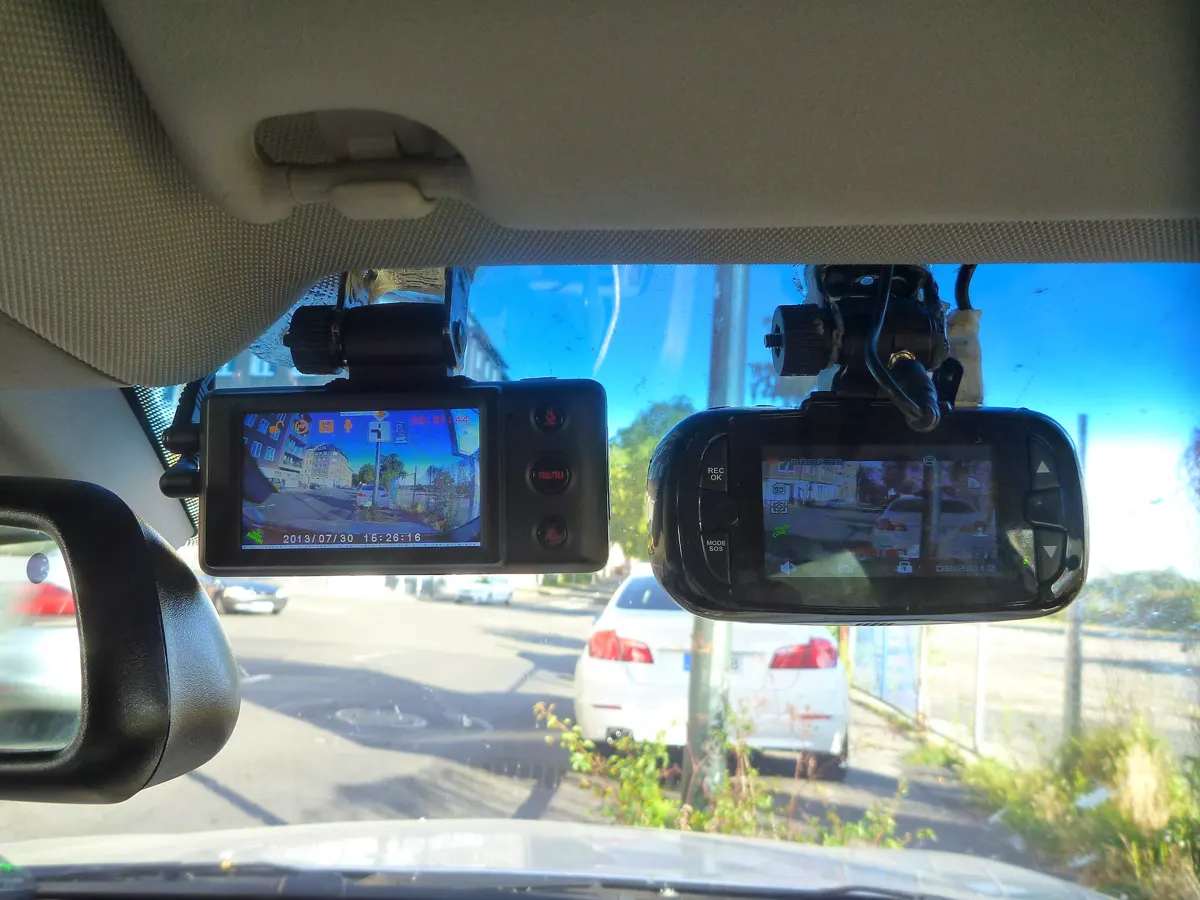
Most drivers don’t need a rear channel. A single front-facing dash cam already covers the scenario that actually happens to most people: someone hits you from the front or side while you’re driving or stopped at a light. A second, rear-facing channel earns its keep in narrower situations, mainly if you’re rear-ended often or you drive for rideshare and want the cabin covered too. We break down the full buying picture, storage and mounting included, in our dash cam guide.
Quick answer
Single channel covers the crash you cause or take head-on. Dual channel earns its price the day someone hits you from behind, or the day a passenger disputes what happened in the car. If you drive for a rideshare app, that day comes.
What a single-channel camera covers
A front-facing dash cam records whatever’s in front of your car: intersections, the vehicle you’re following, pedestrians, lane changes from cars beside you as they enter frame. Insurance disputes most commonly hinge on who had the right of way or who initiated contact at an intersection or lane change, and a clean front-facing clip settles that argument faster than any witness statement. If you’re buying your first dash cam and don’t have a specific reason to need the rear covered, this is where your money should go, and it’s also the cheaper tier. We’ve got model picks in the best dash cams under $100.
Where a rear channel changes the outcome
Rear-end collisions are the exception that makes a second channel worth the extra cost. If you drive in stop-and-go traffic regularly, or you’ve noticed tailgaters are a recurring problem on your commute, a rear-facing lens captures the one angle a front camera physically can’t: what happened behind you right before impact. Rideshare and delivery drivers get an additional reason, since a cabin-facing or rear channel also documents passenger behavior, useful for disputing a bad rating or a false complaint.
The trade-off is cost and installation complexity. Dual-channel units run the rear camera’s cable across the headliner to the trunk or rear window, which is a more involved install than sticking a single unit behind the mirror. Most people manage it themselves in under an hour with the clips included in the box, but it’s not a five-minute job the way single-channel installation is.
Sedans and hatchbacks are usually the easiest cars to run a rear cable through, since the headliner trim comes off cleanly along most of the route. SUVs and vehicles with a third row or a lot of interior panels tend to take longer, mostly because there’s more trim to pull back and reseat. None of this requires cutting anything or drilling holes, which is worth knowing if the idea of running a cable across your headliner sounds more invasive than it is.
Side-by-side comparison
| Factor | Single-channel | Dual-channel (front + rear) |
|---|---|---|
| Typical price range | $40-$100 | $100-$250 |
| Install time | Under 10 minutes | 30-60 minutes |
| Covers rear-end collisions | No | Yes |
| Covers cabin/passenger disputes | No | Some models |
The price gap is real but narrower than it looks once you factor in that a decent single-channel camera and a decent dual-channel camera both need the same endurance-rated microSD card underneath them. You’re paying mostly for the second sensor and the extra cabling, not a fundamentally different product.
Cabin-facing versus rear-facing: they’re not the same thing
“Dual-channel” gets used loosely, and it’s worth untangling before you buy. Some dual-channel cameras point the second lens straight out the rear windshield, which is what captures a rear-end collision. Others point the second lens inward at the cabin instead, which captures passengers and the driver but not the road behind you at all. A handful of three-channel units include both. If your reason for wanting a second lens is rear-end collisions, check the product listing carefully, since “dual-channel” alone doesn’t guarantee rear-road coverage.
Rideshare and delivery drivers usually want the cabin-facing option specifically, since passenger disputes matter more to that use case than what’s happening behind the car. Everyday commuters concerned about tailgaters or rear-end risk want the rear-windshield option instead. They solve different problems even though both get marketed under the same “dual-channel” label, so read the product description closely rather than assuming the second lens points where you need it to.
A simple way to decide
Ask two questions. First, how often do you get rear-ended or tailgated in a way that worries you: if the honest answer is rarely, a single channel is enough. Second, do you drive for a platform that puts passengers in your back seat regularly: if yes, the cabin coverage alone often justifies the upgrade regardless of collision risk. Everyone else is generally better served putting the extra $100 or so toward a sharper front sensor or a proper hardwired parking-mode kit instead of a rear lens they’ll rarely use. A quick gut check that helps: picture the last time you wished you had footage, and ask which direction the camera would have needed to point.
Legal and evidence side is the same either way
Adding a second lens doesn’t change the legal picture. Both setups are legal for video in all 50 states, with the same handful of states restricting windshield mount placement rather than the recording itself, covered in are dash cams legal in your state. And footage from either setup is treated the same way once it’s in front of an insurer or a court: it’s admissible and it can be used by either side, including against you if it shows something you’d rather it didn’t. We go into that specifically in can a dash cam video be used against you in court. A rear channel just means there’s a second angle for that same rule to apply to, which cuts both ways in a cabin dispute too.
One of each, so you can compare prices
Viofo A119M Pro (single channel)
The sane default for a private car. One forward lens, a small body, and nothing to route through the headliner.
- Wi-Fi 6 moves clips to the phone at up to 30 MB/s, so the card can stay where it is
- Nothing to hide along the rear window
Viofo A129 Plus Duo (dual channel)
Front and rear on the same recording, same timestamp. That pairing is what settles a rear-end dispute without a witness.
- Rear camera on a long cable, meant for a sedan or SUV
- Both channels locked together when the G-sensor fires
Frequently asked questions
Can I add a rear camera later if I start with single-channel?
Only if you buy a single-channel unit from a brand that also sells a matching add-on rear lens for that specific model, which isn’t universal. Most single-channel cameras are closed systems. If there’s a real chance you’ll want a rear channel later, buying dual-channel from the start is usually cheaper than replacing the whole unit.
Does a rear camera drain the battery faster in parking mode?
Yes, modestly. Running two sensors instead of one pulls more current during parking-mode recording, which matters if you’re relying on a supercapacitor unit rather than a proper hardwire kit with low-voltage cutoff. It’s rarely enough to strand your car, but it’s worth factoring in if parking mode is a priority.
Do rideshare platforms require a rear or cabin-facing camera?
Most don’t require it outright, but several platforms recommend cabin coverage for dispute protection and some regional markets have pushed drivers toward it informally after incident spikes. Check your specific platform’s current driver policy rather than assuming a blanket rule.
Is a three-channel dash cam worth it over dual-channel?
Only for a specific group: rideshare and delivery drivers who want front, rear, and a dedicated cabin-facing lens all at once. For everyone else, a third channel is diminishing returns on a problem two channels already solve, and it adds another cable run and another point of failure.
If you’re still not sure, buy the single-channel camera. It’s cheaper, it’s a five-minute install, and it covers the collision you’re more likely to have. You can always add a dedicated rear unit down the line if your driving situation changes, and either way it’s worth revisiting our dash cam guide before you buy so storage and mounting don’t become an afterthought.
Behind this review
TrueSpyTech does not operate a test lab, and no article here rests on a unit we plugged in ourselves. Research pulls the spec sheets and the relevant law, the pattern in owner reports fills in what a spec sheet will not admit, and an editor signs off before anything goes live. Ratings are locked before affiliate links go in, never after. The full protocol is on our How we review page.
Google lets you pick which sites come up first in your own results.

.jpg)