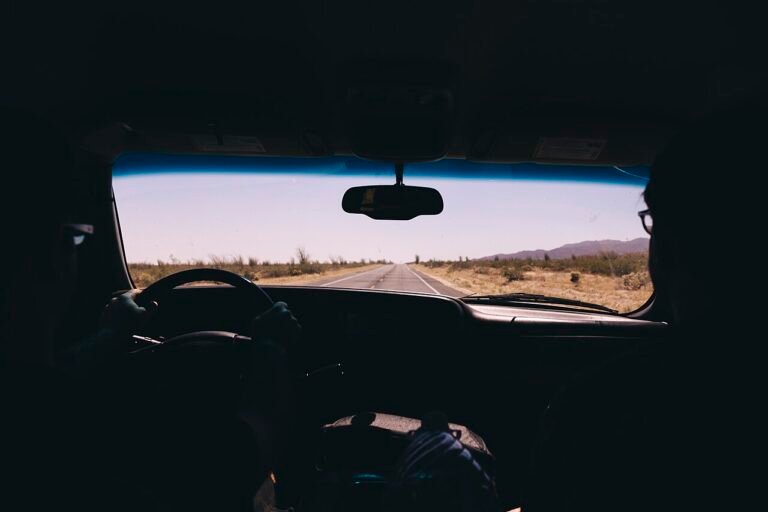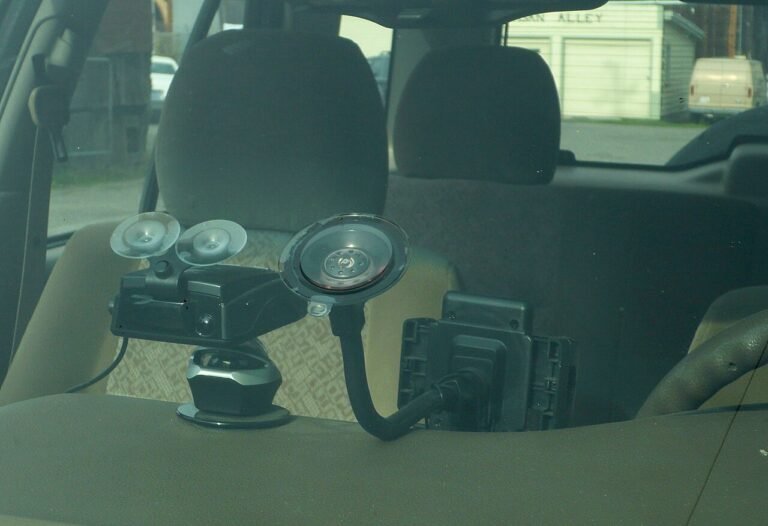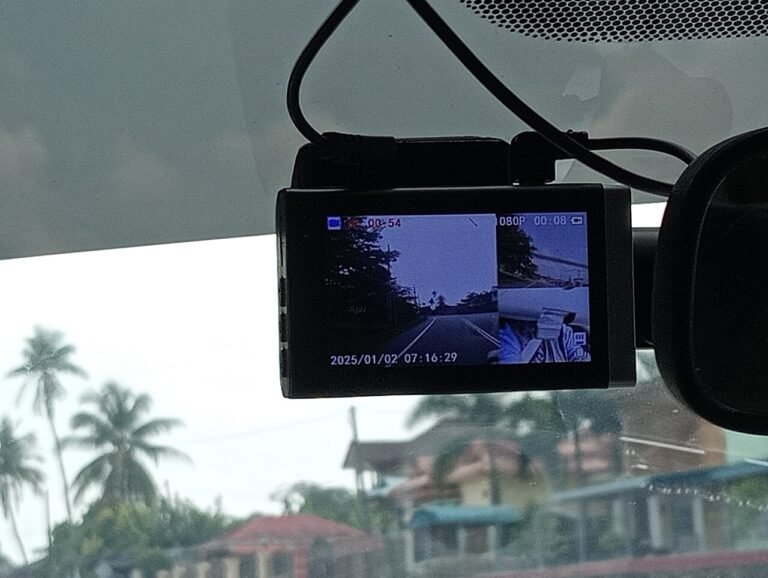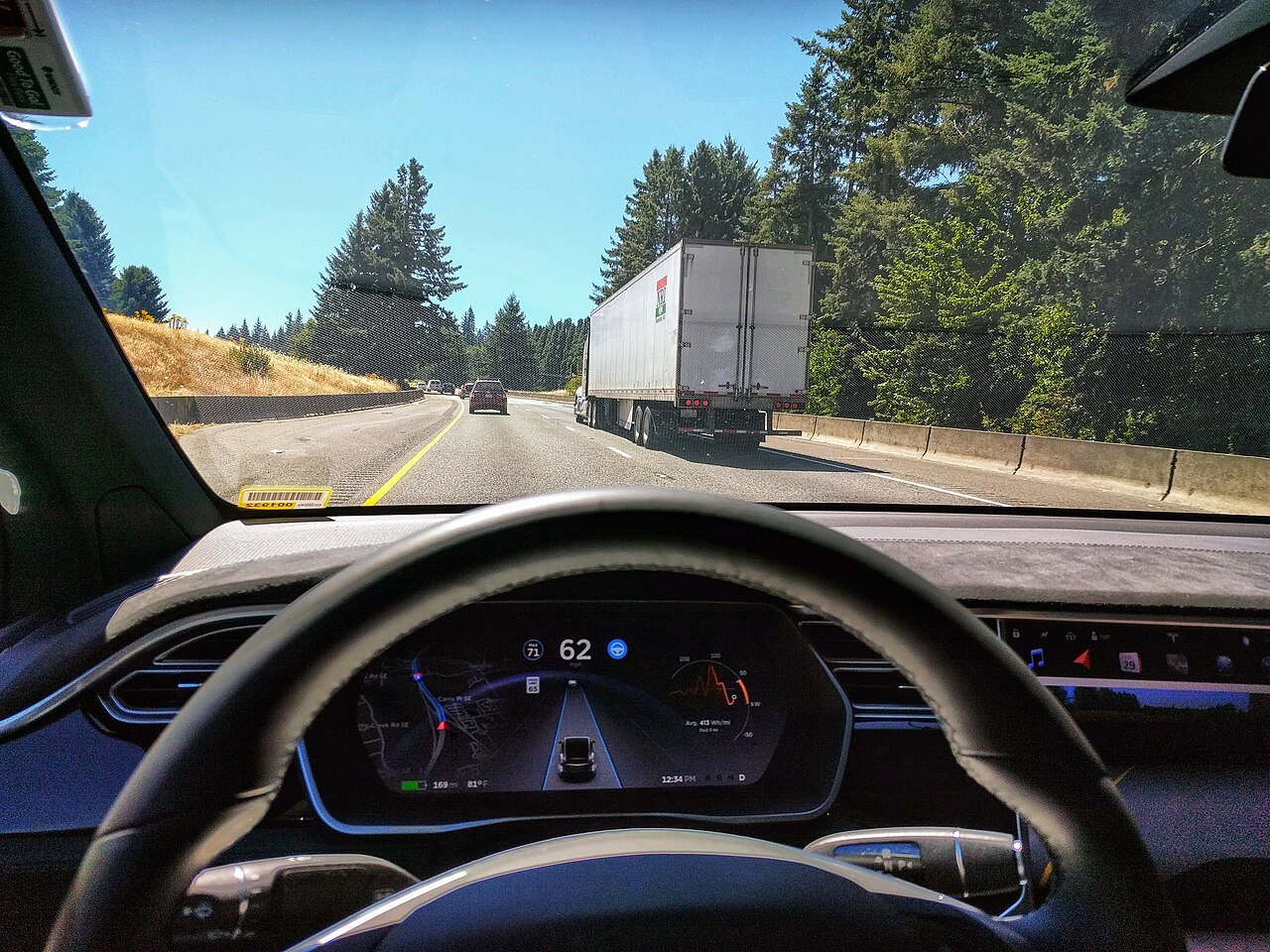
There is no national rule that says where a dash cam must sit on a car windshield. Each state writes its own obstruction law, and most of those laws never mention dash cams at all. They ban anything that blocks the driver’s view, and a few add exact measurements. The safest spot in nearly every state is behind or just beside the rearview mirror, high on the glass, where the camera hides in the part of the windshield you already cannot see through.
Why the law cares about the windshield at all
State windshield statutes were written for stickers, hanging ornaments and tinted film long before dash cams existed. A camera gets caught by the same wording. That has two practical effects. First, a ticket usually depends on whether an officer thinks the device blocks your view, not on the camera’s size. Second, the rule differs sharply from state to state, so a mount that is fine at home may draw a stop in the next state over. Statutes change, so treat the quotes below as a starting point and read the current text for your state before you drill or stick anything to the glass.
What five state statutes say
The five examples below were read from the statute text. They show the two main styles of law: a general clear-view test, and a measured placement zone.
| State | Core rule | Measured exception |
|---|---|---|
| California | No object “placed, displayed, installed, affixed, or applied” on the windshield or side or rear windows | 7-inch square in the lower corner farthest from the driver, 5-inch square in the lower corner nearest the driver |
| Texas | Misdemeanor to drive with an object on the glass that “obstructs or reduces the operator’s clear view” | None by size; rearview mirrors, sunscreening devices and required certificates are listed exceptions |
| Minnesota | No objects suspended between the driver and the windshield that obstruct vision | Navigation systems “mounted or located near the bottommost portion of the windshield” |
| Florida | No sign, poster or other nontransparent material that “materially obstructs, obscures, or impairs” the view | None by size |
| New York | No object placed or hung in a way that obstructs the view through the windshield | “Required or permitted equipment” is exempt |
California: the strictest wording, with a measured zone
California’s Vehicle Code section 26708 starts from a flat ban on objects on the windshield and then carves out small areas. A 7-inch square is allowed in the lower corner of the windshield farthest from the driver, and a 5-inch square in the lower corner nearest the driver. The section also has a separate allowance for video event recorders used for “monitoring driver performance,” which may use “a five-inch square mounted to the center uppermost portion of the interior of the windshield.” The statute does not say a personal dash cam is one of those recorders, so a driver who relies on that clause is making an argument, not citing a rule. The state highway patrol or DMV can say how they apply it.
Texas: no size, only a view test
Texas Transportation Code section 547.613 makes it a misdemeanor to operate a vehicle with an object or material on the windshield or side or rear window that “obstructs or reduces the operator’s clear view.” There is no inch measurement. A small camera tucked behind the mirror is a different question for an officer than a large one in the middle of the glass, but the law gives you no number to point to.
Minnesota: a detail about the bottom edge
The Minnesota rule at section 169.71 bars objects suspended between the driver and the windshield, along with a windshield cracked or discolored enough to limit proper vision. Its exceptions include navigation systems “mounted or located near the bottommost portion of the windshield.” Dash cams are not named there, and a low mount is not the same as a mirror-side mount, so a camera is not clearly covered either way.
Florida and New York: general language, enforced by judgment
Florida’s section 316.2004 targets “any sign, poster, or other nontransparent material” that “materially obstructs, obscures, or impairs the driver’s clear view of the highway or any intersecting highway.” It is a noncriminal traffic infraction. New York’s Vehicle and Traffic Law section 375 makes it unlawful to drive with any object placed or hung in a way that obstructs the view through the windshield or prevents a clear view of the road and traffic behind, with exceptions for “required or permitted equipment.”
The federal contrast: trucks get inches, cars do not
Federal rules apply a different standard to commercial vehicles. Under 49 CFR 393.60(e), antennas and similar devices must not be mounted more than 152 mm (6 inches) below the upper edge of the windshield, must be outside the area swept by the wipers, and must stay outside the driver’s sight lines to the road and to signs and signals. Vehicle safety technologies have their own zone: not more than 216 mm (8.5 inches) below the upper edge of the wiper-swept area and not more than 175 mm (7 inches) above its lower edge.
That regulation covers commercial motor vehicles, not the family sedan. It also does not name dash cams in the paragraph quoted here, so even a fleet manager would be reading a general category and deciding which one a camera falls into. What it does show is the logic regulators use: devices belong high on the glass, away from the wiper sweep and out of the sight lines.
A mounting order that keeps you out of trouble
Start by sitting in your normal driving position and looking at the road, the mirrors and the signals through the glass. Anything you can see around is in your sight line. Put the camera behind the rearview mirror so the mirror housing already hides it from you. If your car has a sensor cluster or a tinted strip at the top, keep the camera clear of it and away from the wiper sweep. Route the power cable along the headliner and down the A-pillar so nothing dangles in front of you. Then check the actual statute for your state, and if you drive commercially, read the federal rule above.
If you plan to hardwire the camera, the parking mode and hardwire kit guide covers power. For the wider question of recording rules, see whether dash cams are legal in your state.
Our take
Mount the camera high on the windshield, behind the rearview mirror, where it hides in your blind spot and away from the wiper sweep. No statute read for this article names a personal dash cam in its measured zone, so a state with an exact inch rule is the one place to double-check before you stick anything down.
Common questions about dash cam placement
Can I get a ticket for a dash cam on my windshield?
It is possible. States such as Texas and Florida penalize objects or materials that obstruct the driver’s clear view, and an officer decides whether yours does. A small camera behind the mirror is less likely to qualify than one in the center of the glass, but the statutes give no guarantee.
Does a suction mount count differently from an adhesive mount?
The statutes read for this article look at the object and its effect on your view, not how it is attached. California’s wording covers anything “placed, displayed, installed, affixed, or applied,” so the attachment method does not change the analysis. Minnesota’s covers objects suspended between the driver and the windshield.
Can I put a dash cam on the dashboard instead of the glass?
A dashboard mount avoids wording that targets objects on the glass, such as California’s. It does not escape general clear-view rules like New York’s, which cover any object placed in the vehicle that obstructs the view through the windshield.
Do the commercial truck rules apply to my car?
No. The federal windshield rule in 49 CFR 393.60 is part of the commercial vehicle safety regulations. It is useful as a comparison for how placement is measured, but a passenger car falls under state law.
Behind this review
TrueSpyTech does not operate a test lab, and no article here rests on a unit we plugged in ourselves. Research pulls the spec sheets and the relevant law, the pattern in owner reports fills in what a spec sheet will not admit, and an editor signs off before anything goes live. Ratings are locked before affiliate links go in, never after. The full protocol is on our How we review page.
Google lets you pick which sites come up first in your own results.