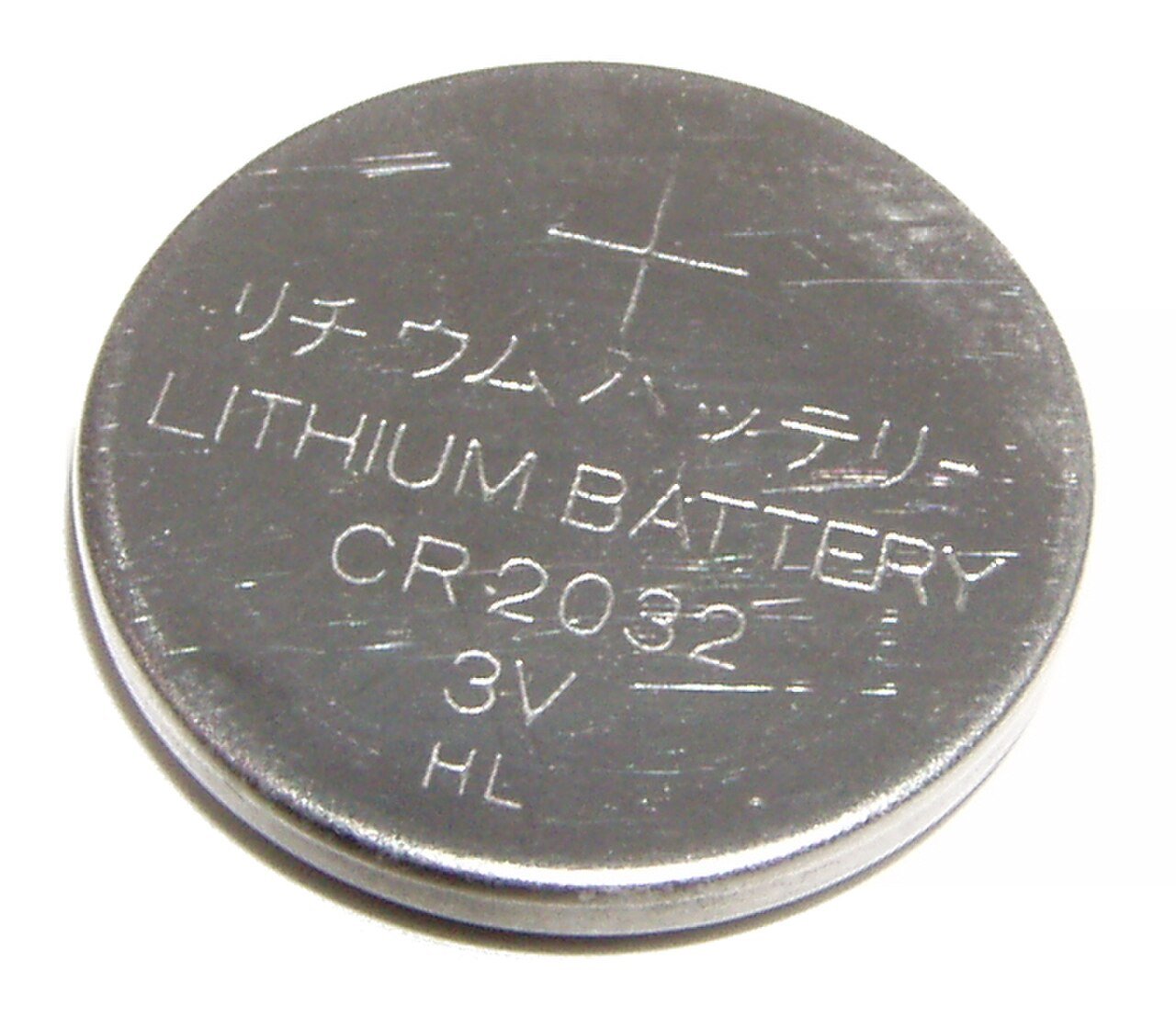
If a child may have swallowed a coin cell battery, such as the CR2032 that powers an AirTag, treat it as an emergency right now. Call the National Battery Ingestion Hotline at 800-498-8666 or Poison Help at 800-222-1222, and get the child to emergency care. Do not wait for symptoms. The rest of this page explains why the clock matters, what the honey step is and is not, and what federal rules say about the products that hold these batteries.
What to do in the first minutes
The Consumer Product Safety Commission puts it in one line: if a button cell or coin battery is swallowed, seek immediate medical attention. It lists the two numbers above. Apple’s AirTag battery page says the same thing in its own warning, and it widens the case: seek immediate medical attention if a battery is suspected to be swallowed or inserted inside any part of the body.
Notice what triggers the call. In both texts it is the swallowing, or the reasonable suspicion of it, not the appearance of symptoms. A tag found open with the battery missing, and a toddler nearby, is a reason to pick up the phone.
Poison.org’s battery ingestion guideline adds two instructions. Do not induce vomiting, and do not delay going to the emergency room. It also lists signs that a battery may be causing trouble: airway obstruction, wheezing or noisy breathing, drooling, vomiting, chest pain, abdominal pain, and difficulty swallowing. If a child shows any of these after a possible ingestion, that is a reason to get to the emergency room immediately. None of them is required before you act, though, and a child can look fine for a while.
Why a battery this small does this much harm
Three separate sources give the same timing. CPSC says a button cell battery can burn through a child’s throat or esophagus in as little as two hours. Poison.org says esophageal burns can begin in as little as 2 hours. Apple’s warning says internal chemical burns can occur in as little as 2 hours, and that death or serious injury can occur if a battery is ingested.
The phrase “as little as” matters. It is a minimum, not an average, and the pages do not offer a longer, safer window. Treat two hours as the earliest point at which damage can already be underway, which is why the instruction is to move at once and not to watch and wait at home.
The scale is not trivial either. A CPSC news release counts 27 deaths from 2011 to 2021 and 54,300 emergency-room-treated injuries over the same period. The information center page describes thousands of emergency department visits every year. Those figures cover button cell and coin batteries in general, not trackers alone, so the numbers say how common the hazard is across households, not how often a tracker is involved.
The honey step, and what it does not replace
CPSC and Poison.org describe the same honey protocol: 10 mL (about 2 teaspoons) every 10 minutes, for no more than 6 doses. It is limited to children 12 months and older, and to a swallowing that happened within the past 12 hours. A baby under a year old, or an ingestion that happened earlier than that, is outside the protocol. Then the phone call and the emergency room are the whole plan.
Poison.org is blunt about the limits. Honey is not a substitute for removal of the battery, and it should not delay the trip to the emergency room. Read that as a stopgap that can run in parallel with getting care, never in place of it. When you call the hotline, ask whether the step fits your child’s situation, because the staff on the line can see the full picture and a web page cannot.
In practice that means starting the call and the trip first, and using the step along the way only if the hotline says it applies. If you are unsure of the time of the swallowing, say so on the call. The 12-hour limit only helps if someone knows where the clock started.
What the federal rules require of the product
Congress passed Reese’s Law (Public Law 117-171) to deal with this hazard. The pages read for this article do not say who Reese was, so this article leaves that out. What they do give is a timeline.
| Date | Milestone |
|---|---|
| August 16, 2022 | Reese’s Law enacted |
| February 12, 2023 | Child-resistant packaging requirement took effect |
| March 19, 2024 | Enforcement of the product standards began |
| September 21, 2024 | Packaging warning label requirements began |
CPSC’s business guidance says the battery compartment must be secured so that it needs a tool, or at least two independent and simultaneous hand movements, to open. It must also hold up to use and abuse testing. Warnings go on the packaging, on the product where practicable, and in the manual, and the packaging must meet 16 CFR 1700.15. The release ties the standard to children six years and younger and exempts toys for children under 14 that comply with existing toy standards.
None of these pages rates a specific product, and none assesses an individual tracker. A rule that says “two independent and simultaneous hand movements” is a design requirement for manufacturers. It does not turn a battery compartment into something a determined or very curious child cannot open, and it says nothing about a loose battery that has already been removed.
Keeping a tracker battery out of reach
Federal compliance is a floor for manufacturers, and it does nothing about the spare battery in a drawer. CPSC’s advice for households is to keep products with accessible button batteries away from children unless the compartment has a screw closure. Tape the terminals of removed batteries and dispose of them properly. Apple’s page labels the battery a choking hazard for small children and says to keep it away from them.
A tracker on a key ring or in a diaper bag is easy for a small child to reach, so where it lives matters as much as how it is built. If your reason for a tracker is a child’s whereabouts, the guide to monitoring kids, aging parents and pets covers where monitoring helps and where it overreaches, and the GPS watches for kids comparison looks at a different device for the same job. Whichever device you choose, ask the same question about its battery compartment.
Our take
A swallowed coin cell battery is a call-first situation: 800-498-8666 or 800-222-1222, then emergency care, with no waiting for symptoms. Honey is a narrow, time-limited add-on for children 12 months and older, never a replacement for removal. The better habit is prevention: keep trackers and spare batteries out of a small child’s reach and prefer products with screw closures where you can.
Common questions about coin cell battery safety
Is the AirTag battery the kind that can burn through a child’s throat?
Apple’s page says the AirTag uses a CR2032 lithium 3V coin battery and carries the warning about internal chemical burns in as little as 2 hours. CPSC describes the same burn timing for button cell batteries in general.
Should I make my child vomit?
No. Poison.org says not to induce vomiting and not to delay the emergency room. Call 800-498-8666 or 800-222-1222 and follow the instructions you are given.
Can I give honey to a toddler right away?
CPSC and Poison.org limit the honey step to children 12 months and older who swallowed the battery within the past 12 hours, at 10 mL every 10 minutes for up to 6 doses. Poison.org says it does not replace removing the battery or going to the emergency room.
What should I do with a battery I took out of a tracker?
CPSC advises taping the terminals of removed batteries and disposing of them properly, and keeping them out of children’s reach in the meantime.
Behind this review
TrueSpyTech does not operate a test lab, and no article here rests on a unit we plugged in ourselves. Research pulls the spec sheets and the relevant law, the pattern in owner reports fills in what a spec sheet will not admit, and an editor signs off before anything goes live. Ratings are locked before affiliate links go in, never after. The full protocol is on our How we review page.
Google lets you pick which sites come up first in your own results.