In most states, you don’t have to tell a housekeeper, nanny, dog walker, or contractor that a video camera is running in the common areas of your home. Video-only recording of your own property generally doesn’t require disclosure to anyone who enters it, service workers included. That default changes fast the moment audio recording or a private space like a bathroom enters the picture, and it can also change if the company sending that worker requires notice in its own service agreement.
Why the general rule doesn’t bend for household workers
Privacy law in most states asks whether a person has a reasonable expectation of privacy in the specific space, not who they are or why they’re standing in it. A living room, a kitchen, a hallway, these are common areas of the home, and a camera recording video there generally doesn’t need anyone’s permission, whether the person walking through is a guest, a relative, or someone you’re paying to clean the floor.
A contractor replacing a faucet has the same legal standing regarding that camera as a friend stopping by for coffee. The law isn’t built around occupation. It’s built around the room.
This is also why a change in who owns the home, say a household passing from a private owner to a property management company, doesn’t change what a camera is allowed to record. The room’s status as common or private space stays constant regardless of who holds the title.
A live-in worker’s own room is not a common area
If a housekeeper, nanny, or caregiver lives in the home, the room assigned to them for sleeping and personal use is treated the way a tenant’s bedroom would be, not as a common area you’re free to record. Owning the house doesn’t extend the same recording rights into a space someone else uses as their private living quarters, even informally. This distinction gets missed often because it still feels like the same building, but the legal test tracks the room’s actual use, not the deed.
Recording inside that private room without the live-in worker’s knowledge carries exposure similar to recording a tenant without consent in states that treat it that way, and it sits well outside the video-only-common-areas rule that covers the rest of the house.
Audio is where disclosure often becomes mandatory
Video and audio are treated as two separate legal questions in most states, and audio is the stricter one. Some states require only one party to a conversation to consent to it being recorded, which in your own home usually means you. Others require every party’s consent, which would include a housekeeper or contractor working within earshot of a live microphone. Getting this distinction backward is the single most common mistake people make with home cameras that also record sound.
The practical fix in most homes is simple: disable audio recording on cameras placed anywhere a worker will be present for an extended stretch, or confirm which consent standard applies where you live before leaving it on. The state-by-state breakdown of one-party and all-party consent rules is covered in one-party vs two-party consent states.
Bathrooms and private spaces stay off-limits regardless
No worker classification changes the rule that recording, video or audio, is not permitted in bathrooms, changing areas, or anywhere a reasonable person expects full privacy, even in a home you own. This holds whether the person in the room is a cleaner, a repair technician, or a family member. It’s one of the few areas of surveillance law that doesn’t meaningfully vary by state.
A laundry room or mudroom where a worker changes out of wet clothes or a uniform can fall into this same category depending on how it’s used, even though it wouldn’t normally count as a private space. If a room regularly doubles as somewhere a worker changes, treat it the same as a bathroom rather than assuming its usual function as a common area still applies.
Agencies and contracts often ask for more than the law does
Cleaning companies, nanny agencies, and some contractor firms increasingly include a camera-disclosure clause in their own service agreements, separate from and often stricter than what state law requires. A housekeeping service might require written notice of any recording device in the home as a condition of sending staff, regardless of whether the law obligates you to provide it. Reading the actual service agreement, not just assuming the legal minimum applies, avoids a dispute that has nothing to do with statutes and everything to do with contract terms.
This is a distinct issue from what’s covered in Is it legal to put a hidden camera in your own home, which addresses the baseline legal rule rather than what a private company’s contract might add on top of it.
Posting a notice even when it isn’t required
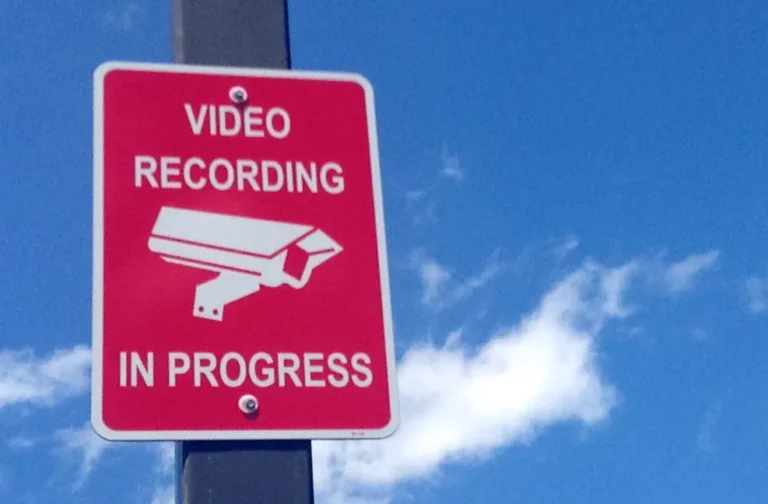
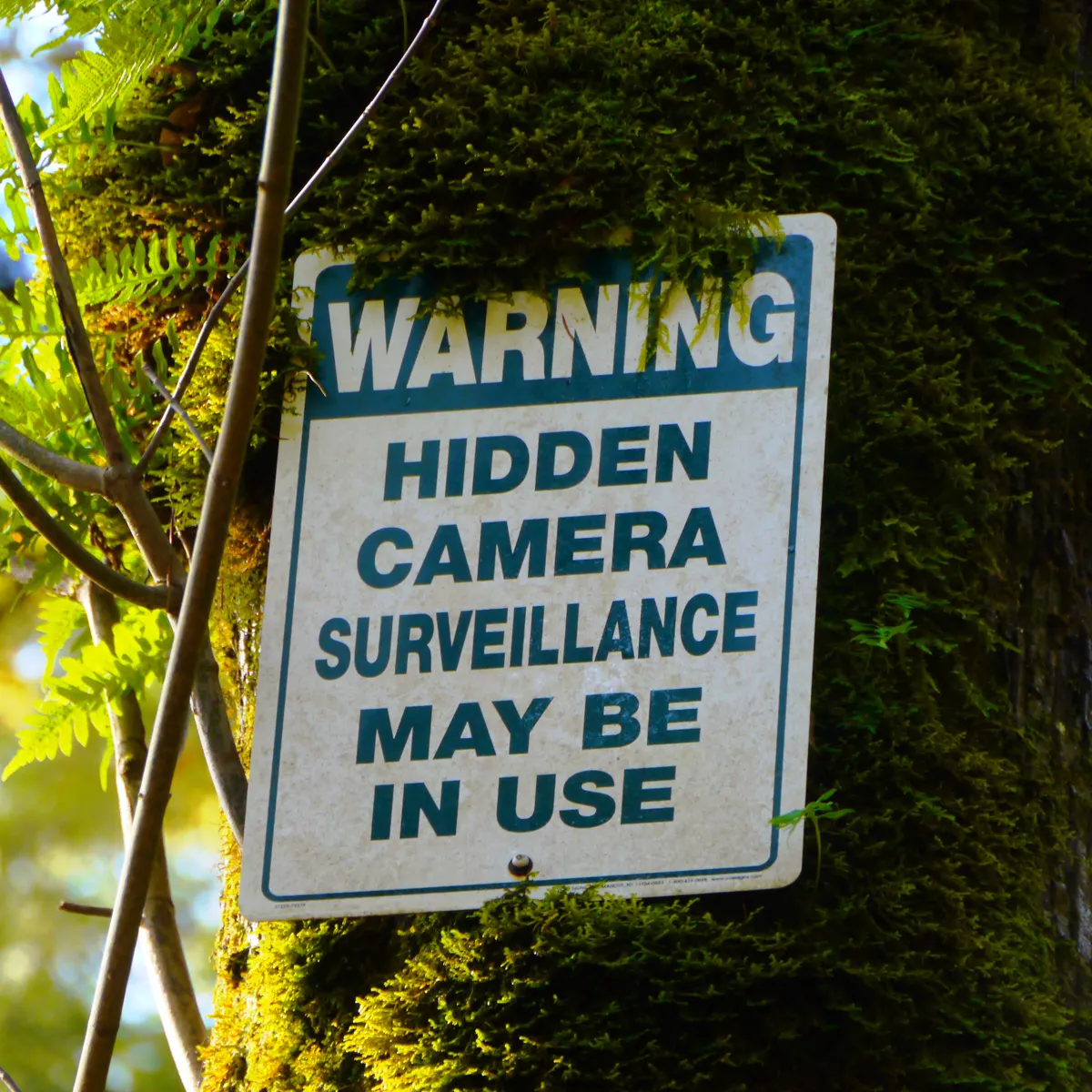
A small sign near the entrance stating that cameras are in use resolves most disputes before they start, even in states where no such notice is legally required. It also happens to be required outright in some states for certain categories of recording, particularly workplace-adjacent monitoring, which a housekeeper’s recurring visits can start to resemble depending on how a state’s labor rules are written. When in doubt, posting costs nothing and removes an entire category of argument.
Some household-staffing platforms and property managers go further, requiring the specific rooms under camera coverage to be listed in writing before a worker is placed, regardless of what state law demands on its own. A written list also protects you if a dispute arises later, since it establishes plainly what was and wasn’t disclosed at the time the worker began.
What happens when a worker objects anyway
A housekeeper, contractor, or nanny who isn’t comfortable being recorded generally has the option to decline the job or ask their agency to send someone else. What they typically can’t do is compel the removal of a legally placed video camera in a common area of your own home. Where this shifts is if the recording violates a term the agency itself put in its contract with you, at which point the dispute becomes contractual rather than a matter of surveillance law.
Where a dispute does escalate, most resolve well before reaching a courtroom, since agencies would rather reassign staff than fight over a placement they can simply decline for future workers.
Broader background on how these rules interact across different rooms and relationships is in the hidden camera buying guide and in how surveillance laws work across US states.
Verdict
Video-only cameras in common areas generally need no disclosure to housekeepers or contractors under state law. Audio changes that answer depending on your state’s consent rule, bathrooms and changing areas are off-limits no matter what, and a cleaning or nanny agency’s own contract can require notice the law itself doesn’t. Check the contract, not just the statute, before assuming you’re covered either way.
Do I have to tell my housekeeper I have security cameras?
Generally not, for video-only cameras in common areas of your own home. Some cleaning companies require disclosure in their own service contracts even where state law doesn’t, so checking the agreement is worth doing before assuming silence is fine.
Can a nanny or contractor refuse to work in a monitored home?
Yes. They can decline the job or ask their agency to send a different worker. What they generally can’t do is force removal of a camera that’s legally placed in a common area of a home you own.
Is recording audio around a housekeeper treated differently than video?
Yes, and this is where most mistakes happen. Audio recording falls under state consent laws that require either one party or every party to agree, depending on where you live. Video-only recording in common areas doesn’t carry the same requirement in most states.
Do I need a camera in the bathroom to catch theft or damage?
No, and it isn’t legal regardless of the reason. Bathrooms and other private spaces are off-limits to recording in every state, for every category of visitor, no exceptions tied to suspicion of theft or damage. A camera in an adjoining hallway pointed away from the bathroom door is a more defensible option if theft is the actual concern.
Does posting a camera notice sign actually matter legally?
Sometimes, and it always helps regardless. A few states require notice for specific recording categories, and even where it isn’t required, a visible sign heads off most disputes with workers who’d otherwise be surprised to learn a camera was running.
Behind this review
TrueSpyTech does not operate a test lab, and no article here rests on a unit we plugged in ourselves. Research pulls the spec sheets and the relevant law, the pattern in owner reports fills in what a spec sheet will not admit, and an editor signs off before anything goes live. Ratings are locked before affiliate links go in, never after. The full protocol is on our How we review page.
Google lets you pick which sites come up first in your own results.