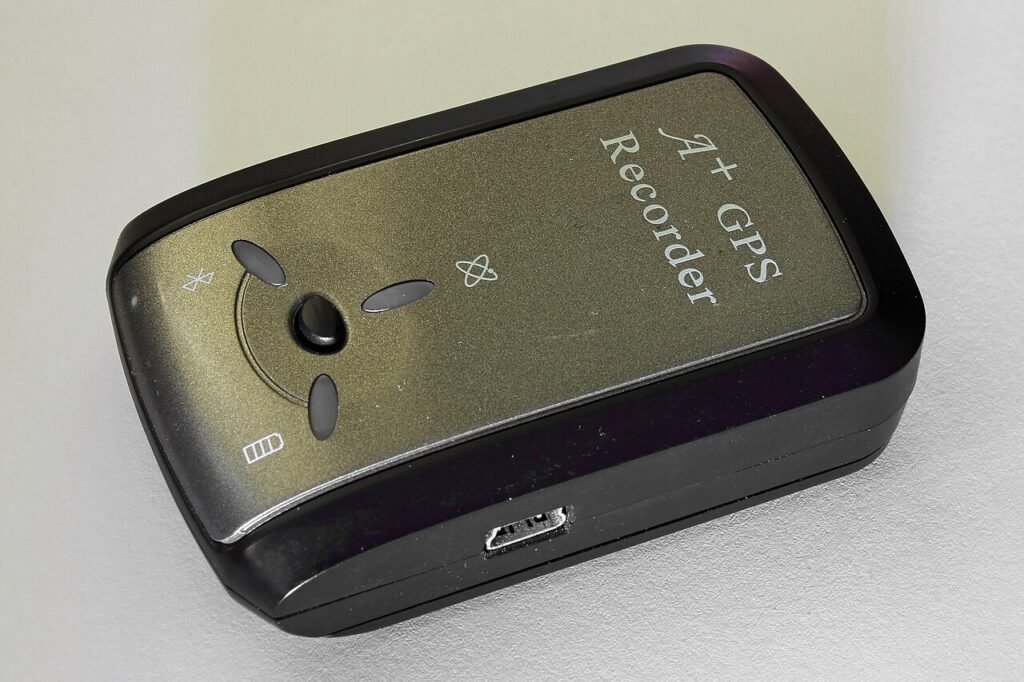
The Optimus 2.0 is the pick worth buying if you want a GPS tracker with zero recurring cost. It logs breadcrumb-style location data to an internal SD card that you retrieve and plug into a computer later. The trade-off is real, and it’s the one thing every subscription-free tracker shares: you’re checking where a vehicle went after the fact, not watching it move in real time on your phone right now.
Verdict
The Optimus 2.0 is the best all-around subscription-free pick for vehicles, no live tracking, but a full trip history with no bill ever. For personal items and low-stakes use, an Apple AirTag or Tile Pro does the job through crowd-sourced Bluetooth networks instead, with the same catch that you only see a location when the item passes near another network device.
Most GPS trackers marketed as “no contract” still charge monthly. That phrase usually just means you can cancel the plan whenever you want, not that there’s no plan at all. True subscription-free tracking works differently under the hood, and it’s worth understanding the two approaches before you buy, because they suit very different situations.
How does a GPS tracker work without a monthly fee?
There are two real ways to skip the subscription. The first is SD-card logging: the device has a GPS chip and enough onboard storage to record a trail of coordinates and timestamps over days or weeks, and you retrieve that data manually by pulling the card or connecting a USB cable. No cellular chip means no carrier bill, ever. The Optimus 2.0 is a common example of the type. Battery life on any passive logger is a function of the logging interval and almost nothing else: set it to drop a point every few minutes and a charge stretches into weeks, set it to log continuously and you are back at the USB cable in a day or two.
The second approach skips GPS hardware almost entirely and relies on Bluetooth plus a crowd-sourced device network. An Apple AirTag broadcasts a quiet Bluetooth signal that any nearby iPhone can anonymously relay back to Apple’s Find My network, which is how you see roughly where it is on a map without the tag itself ever connecting to cellular data. Tile Pro works the same way through Tile’s own smaller network. Both are genuinely free after the one-time purchase, but location updates only happen when another network device happens to pass close by. In a rural area with light foot traffic, that could mean hours between updates.
SD-card logger vs. Bluetooth tracker: which fits your situation?
For a vehicle, the SD-card logger wins almost every time. Cars travel through areas with inconsistent Bluetooth density, and you generally want a complete trip log rather than scattered pings. For something small like a backpack, a bike, or a set of keys that mostly stays in populated areas, an AirTag or Tile is lighter, cheaper, and rides on a network that’s already enormous since it piggybacks on every iPhone nearby.
| Device | Method | Update pattern | Best use |
|---|---|---|---|
| Optimus 2.0 | GPS to SD card | Retrieved manually after the trip | Vehicles, full trip history |
| Apple AirTag | Bluetooth + Find My network | Whenever a nearby iPhone relays it | Bags, keys, items in populated areas |
| Tile Pro | Bluetooth + Tile network | Whenever a nearby Tile app user passes | Budget item tracking, Android users |
Worth noting: an AirTag is genuinely poor at vehicle tracking specifically, since Apple designed anti-stalking alerts that notify a nearby iPhone user if an unknown AirTag appears to be traveling with them over time. That feature exists to stop covert tracking of people, and a vehicle moving around all day can trigger it even when the intent is completely legitimate, like keeping tabs on your own car.
What you give up by skipping the subscription
The obvious loss is real-time visibility. If you need to know where a vehicle is right now, not where it was an hour ago, a subscription-free tracker won’t do that job. Geofence alerts, the kind that ping your phone the instant a car leaves a set radius, generally require the cellular connection a paid plan provides. Neither the Optimus 2.0 nor an AirTag can replicate that.
The second, less obvious trade-off is battery management. SD-card loggers still need retrieval and recharging on a schedule, usually every few weeks, which means physically accessing wherever the tracker is mounted. A cellular tracker with a monthly plan handles that the same way, so this isn’t unique to subscription-free devices, but it’s worth knowing going in that “no monthly fee” doesn’t mean “no maintenance.”
Battery life is what decides whether a fee-free logger is usable at all. The runtime and storage calculator takes a capacity in mAh and a reporting interval and returns days between charges.
The legal side doesn’t change based on the price tag
Whether a tracker costs $20 a month or nothing at all, the rules for where you’re allowed to put it stay exactly the same. Tracking a vehicle you own is legal in the large majority of states regardless of the device. Tracking someone else’s vehicle without their consent isn’t, and a handful of states specifically criminalize that regardless of whether the tracker reports live or just logs to a card. We cover the full ownership-and-consent framework in our GPS tracker guide, and the state-by-state specifics live in GPS tracking laws by state.
If the reason you’re considering a subscription-free tracker is monitoring a teenager’s car, ownership still governs legality the same way. Our breakdown of tracking a teenager’s car covers that scenario in detail, and it applies whether you go with a cellular device or an SD-card logger.
Installation: magnetic mount or something more permanent?
The Optimus 2.0 ships with a magnetic case similar to cellular trackers, so it sticks to a wheel well or frame rail the same way. If you want something that doesn’t need periodic removal for charging, a hardwired setup draws power from the vehicle continuously, though that generally applies to cellular OBD-II devices rather than SD-card loggers, since a hardwired unit with no cellular connection has little reason to run constantly. We compare mounting styles in more depth, including realistic battery life for each, in magnetic vs. hardwired GPS trackers.
If you suspect a tracker was placed on your own car
Subscription-free trackers are actually harder to detect than cellular ones in one specific way: they don’t transmit anything, so an RF detector sweep won’t pick them up between updates. A visual check of common hiding spots becomes more important as a result. Our counter-surveillance guide and the dedicated how to check your car for a GPS tracker walkthrough both cover what a thorough sweep looks like.
Frequently asked questions
Are subscription-free GPS trackers accurate?
Yes, roughly as accurate as cellular trackers, since both use the same GPS satellite system for positioning. The difference is in how you get the data, not how precise a single reading is. SD-card loggers can drift slightly in dense urban areas, the same limitation cellular trackers share.
Can I use an AirTag to track a car without a monthly fee?
You can, but expect gaps between location updates in areas without much iPhone foot traffic, and Apple’s anti-stalking alerts may notify people near the vehicle. An SD-card logger like the Optimus 2.0 is built specifically for this use case and doesn’t carry that limitation.
How much does a one-time GPS tracker cost compared to a subscription model?
Subscription-free trackers typically run in a similar range upfront as cellular ones, but you never pay a recurring bill afterward. Over a year or two of use, that adds up to real savings, though you’re trading away real-time visibility to get there.
If real-time visibility isn’t the actual requirement, a subscription-free tracker will do the job for a fraction of what a year of monthly plans costs. Just go in knowing you’re trading live updates for a complete record you check later, and pick the device that matches what you’re tracking, a car versus something smaller.
Behind this review
TrueSpyTech does not operate a test lab, and no article here rests on a unit we plugged in ourselves. Research pulls the spec sheets and the relevant law, the pattern in owner reports fills in what a spec sheet will not admit, and an editor signs off before anything goes live. Ratings are locked before affiliate links go in, never after. The full protocol is on our How we review page.
Google lets you pick which sites come up first in your own results.